Poland and Baltic States
“As you know, the Kaliningrad region is isolated, geographically isolated, so we could apply some measures also to cut something,” said Linas Linkevicius, Lithuanian Foreign Minister. “Transport, we could cut off trains, but not only trains, also the supply of goods, whatever. It is theoretically possible,” the official added. 
Journalists raised the topic as Lithuania, which currently holds the rotating presidency in the EU, is preparing to host the Third Eastern Partnership Summit– the major conference dedicated to strengthening trade ties between the European economic bloc and six states in Eastern Europe and the Caucasus – Armenia, Azerbaijan, Belarus, Georgia, Moldova and Ukraine. All of these countries are Russian neighbors and close economic partners.
Russia is currently building its own economic bloc – the Customs Union – which currently consists of itself, Belarus and Kazakhstan, but to which it welcomes other neighboring nations.
Brussels is locked in an increasingly tense standoff with Moscow over its Eastern Partnership policy, which is designed to draw six countries — Ukraine, Belarus, Moldova, Georgia, Azerbaijan and Armenia — more closely into the European fold.
At the Vilnius summit on Nov. 28 to 29, the EU is expected to sign a free trade deal with Ukraine and take further steps towards free trade agreements with Moldova and Georgia. No substantial progress is expected with the other partnership states, which remain more closely aligned with the Kremlin.
A 33-metre Foucault Pendulum, which demonstrates how the earth revolves, has been installed in Torun, birthplace of astronomer Copernicus, the discoverer of the heliocentric universe. 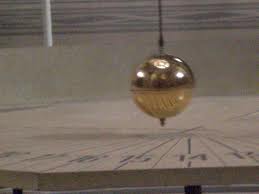
The gleaming pendulum is the first major exhibit to be installed at the emerging Mill of Knowledge Modernity Centre.
The exhibit follows French physicist Leon Foucault, whose famed pendulum was a landmark device in demonstrating how the earth revolved. Foucault performed the first public demonstration in Paris in February 1851.
Several centuries earlier, Torun-born astronomer Nicolaus Copernicus who discovered, much to the Church’s discomfort, that the Earth revolves around the sun and not the other way round, as had previously been thought.
Copernicus (known as Mikolaj Kopernik in Poland), who studied at Krakow’s Jagiellonian University, published his pioneering book On the Revolutions of the Celestial Spheres in 1543, describing how the earth revolved around the sun.
Source: PAP, Polskie Radio
Poland does not expect the EU Council to lift this year the Excessive Deficit Procedure, an EU mechanism for enforcing fiscal rules. The country missed its public-deficit target for 2012 according to the recently released data from the Central Statistical Office (GUS). 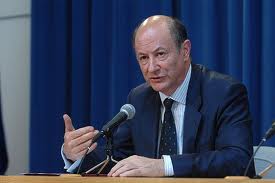
Warsaw has been subject to scrutiny from Brussels since 2009 for running public deficits above the EU’s limit of 3% of gross domestic product. Despite initial plans to shrink the gap to 2.97%, the 2012 deficit ended up at 3.9% of GDP, GUS said.
“The Polish government believes it will reduce its general government deficit to 3.5% of GDP in 2013, thus paving the way to lifting excessive deficit procedure in 2014 versus previously expected 2013”, Polish Finance Minister Jacek Rostowski said at a news conference.
Of the EU’s 27 members, 20 are currently under an Excessive Deficit Procedure for missing deficit targets.
Poland is the only European Union country to have avoided a recession since the Lehman Brothers’ collapse in 2008, but its expansion decelerated to 1.9% last year from 4.5% in 2011, according to recent data.
With the prolonged troubles of the eurozone undercutting the country’s export industries, rising unemployment, and pressure on private consumption and investment, the finance ministry cut its growth forecast for 2013 to 1.5%
Poland. Warsaw Ghetto Uprising, 70 years later.
23 Apr 2013“The Polish capital of Warsaw marked the 70th anniversary of the Warsaw Ghetto Uprising of 1943, when hundreds of young, poorly armed Jews staged an ultimately doomed revolt against the Nazis.
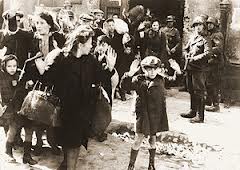
from Wikipedia
Poland was once a Jewish bastion in Europe, 90% of the country’s 3.3 million pre-war Jewish residents were dead by 1945.
One synagogue remains in Warsaw, but it is tucked discreetly away among the skyscrapers and apartment buildings of the capital’s downtown area. To honour the occasion of the 70th anniversary of the uprising, the Museum of the History of Polish Jews is now open. The museum is funded by the Polish state, the city of Warsaw, and several private donors.
The Warsaw Ghetto was the biggest of all of Nazi-occupied Europe’s Jewish Ghettos during World War II, but Germans razed the neighbourhood and the post-war communist regime later built houses directly over the rubble. Three small fragments of the ghetto’s wall survived”.
Article – France 24 – April 2013.
Anti-missile defence, US change of plans. No interceptors for Europe. Russia and Poland not happy.
18 Mar 2013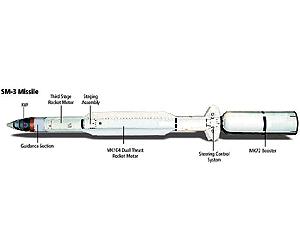
From spacewar.com
To fund boosting its west coast defences, the US is to scrap plans to place SM-3 IIB missile in Europe and deploy them in Alaska.
The long-range interceptors were to have been the final phase of a program that Russia contends aims to counter its own missiles. Washington says the system is meant to stop missiles from Iran and North Korea.
U.S. Defence Secretary Chuck Hagel, however, stressed that plans are on track to deploy shorter-range missiles to Poland and Romania within the next five years.
“We feel no euphoria in connection with what was announced by the U.S. defence secretary, and we see no grounds for correcting our position”, said Russian Deputy Foreign Minister Sergei Ryabkov.
“This is not a concession to Russia and we do not see it as such,” he added. “We will continue a dialogue and seek the signing of legally binding agreements that all elements of the U.S. missile-defence system are not aimed at Russian strategic nuclear forces.”
In recent past U.S. defence and political officials stated that shorter-range interceptors would still be based in Poland as part of NATO’s missile defence system in Europe.
The Obama administration has planned to put medium-range interceptors in Redzikowo, in northern Poland, starting in 2018, as part of the NATO system.
The U.S. missile defence plans involve building up the system in Europe in four stages, with shorter- and medium-range interceptors to be deployed in the first three phases, and longer-range interceptors due in the fourth phase.
However, the fourth stage has not yet been funded by Congress, and there are indications the technology is not ready. At the same time they have been an irritant in relations between the U.S. and Russia.
Phase one of the system has already been deployed, with anti-missile interceptors on a ship in the Mediterranean Sea. Phase two is to include interceptors in Romania, then interceptors in Poland will come as part of phase three.
The U.S. missile defence system at Romania’s Deveselu military base is not affected either and will become operational in 2015 as planned.
Poland’s main aim in having the U.S. interceptors has been to have an American military presence on Polish soil in the belief it will increase the country’s security, particularly given fears that Russia could one day try to dominate the region again.
The US will now add 14 interceptors against incoming missile threats, to the 30 already in place in California and Alaska by 2017.
Sources: PAP, Reuters, AP, AFP
“Let’s first say that the economic crisis is not a euro crisis. There are also economic difficulties in countries that do not have the euro – while at the same time, there are eurozone countries that don’t have any difficulties. In our accession treaty there is a part that says that we will introduce the euro as soon as possible. So it really is an obligation based on that treaty.
In the case of Lithuania, we already de facto have the euro because we have a currency board system that pegs the litas to the euro at a fixed, strong rate. And in reality, our monetary policy very much depends on the European Central Bank. We do not have monetary instruments of our own. We have only the obligations and restrictions and not the benefits that we would have if we had the euro. There are enough reasons to join the eurozone as soon as we can.”
Interview – Deutsche Welle – March 2013.
EU 2014 – 20 budget “will enable us to finish the physical modernization of Poland, the building of our roads, rail and scientific infrastructure, and a chance for us to catch up with the rest of Europe.”
“We would like to have Western-style neighbours on both sides of the border – which is easier said than done.” (Ukraine, Lithuania)
Audio – Polish Radio
“Cardinal Jozef Glemp was a primate of great breakthroughs, and he showed great composure and wisdom in the face of extreme political divisions,” declared Cardinal Stanislaw Dziwisz, Archbishop of Krakow, during Monday’s funeral service, as cited by the Polish Press Agency (PAP).
“During the difficult times of communism, he stood boldly and prudently on the side of the nation, striving for freedom and complete independence from the totalitarian system,” the cardinal reflected. 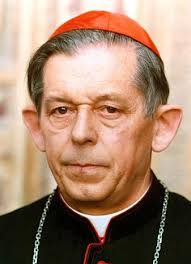
Current Primate of Poland Archbishop Jozef Kowalczyk said in his homily that Glemp had been faithful to the teaching of Pope John Paul II, encouraging people “to change the world through words and dialogue, and not by the sword and firearms.”
Main Article – Radio Polska, Jan.28th, 2013.
– –
“Jozef Glemp was born Dec. 18, 1929, in Inowroclaw, Poland. He decided early to be a priest, but his schooling was interrupted when the Nazis invaded in 1939. His father, a salt miner, joined the resistance, but Jozef, his mother, sister and two brothers became slave farm labourers. Ordained in 1956, Glemp was a parish priest and teacher before earning doctorates in civil and canon law in Rome. He returned to Poland in 1964 and was Wyszynski’s legal adviser for 12 years. He was Bishop of Warmia, a diocese of 1.3 million, from 1979 to 1981, when he succeeded Wyszynski on his death.
As he settled into his role as protector of the church in a national crisis, he asked Poles to pray instead of taking to the streets when martial law was imposed and Walesa was jailed…”
Main Article – The Globe and Mail Jan. 27th, 2013.
Greenpeace has criticised Poland hosting the UN climate summit in 2013, as announced at the UN Framework Convention on Climate Change in Doha, Qatar. “A host country should be firmly committed to climate protection and be able to negotiate compromises and seal deals, but Poland has a bad track record on both counts,” says Greenpeace’s Jiri Jerabek. 
Ministers and NGOs are at the 18th Global climate change conference, which opened in Qatar on November 26th, with representatives from nearly 200 nations convening for two weeks of talks aimed at curbing global carbon emissions.
Poland has been slammed for its record on environmental issues after it blocked raising EU carbon emission targets and its decision to go ahead with shale gas extraction and building a nuclear power station.
“We have experience organizing the 2008 Conference of Parties and heading the European Union delegation at the previous climate summit,” Polish environment minister Marcin Korolec said in a message sent to the Bloomberg news agency. “We know how to grow and cut emissions. All ingredients are there for a good negotiation session.”
“We are sending a clear signal that the main priority of climate policy should be the signing of a global deal,” Korolec added. “Europe will only be able to lead the process if we manage to convince our partners to join.”
Poland hosted the UN climate summit in 2008 when 10,000 delegates attended the conference in Poznan.
Source: Polish Radio and Bloomberg
Poland, Lithuania, Russia: Respect for the dead!
30 Nov 2012Lithuanian police have arrested five people after a tomb containing the heart of Polish national hero Jozef Pilsudski was vandalised in Vilnius on November 24th. The bunch of thugs also draped a banner with the words “Poles die” and left a box with “attention bomb” and “TNT” written on it. 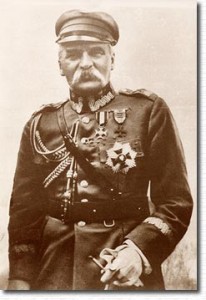
The Polish ambassador in Vilnius, Janusz Skolimowski said he has received assurances that security will be stepped up at the Rossa Cemetery. Pilsudski was born in Zulow near Vilnius, then part of the Russian empire, in 1887. After his death in 1935 his body was buried in Krakow, while his heart was taken to Vilnius.
At the same time, the Vremya news magazine on Russian Channel One reported that in 1953, when Polish authorities decided to dig up the remains of Russian soldiers who died fighting Nazi German forces in Kostrzyn nad Odra in western Poland, so as to re-bury them in large cemeteries around the country, they did so by only partially removing all the body parts.
Last October a research dig found that 102 out of 110 bodies had been re-buried with their skulls or other parts missing.
The Russian news programme claimed the “barbaric” exhumations showed a “monstrous lack of respect for the dead” and reported that Russian authorities had called on Poland to give a full explanation as to why the bodies of “soldiers who liberated Poland from Nazi Germany” were shown so little respect.
“Standards in 1953 differed significantly from those of today,” Adam Siwek from Poland’s state-backed Council for the Protection of Struggle and Martyrdom has already answered.
Source: Polish Radio
Welcome
We are a group of long experienced European journalists and intellectuals interested in international politics and culture. We would like to exchange our opinion on new Europe and Russia.
Categories
- Breaking News (11)
- CIS (129)
- Climate (2)
- Energy&Economy (115)
- EU Eastern Dimension (85)
- Euro 2012 – Sochi 2014 – World Cup 2018, Sport (43)
- Euro-Integration (135)
- History Culture (198)
- International Policy (261)
- Military (74)
- Interviews (18)
- Italy – Italia – Suisse (47)
- Odd Enough (10)
- Poland and Baltic States (126)
- Religion (31)
- Russia (421)
- Survey (4)
- Turning points (4)
- Ukraine (176)
- Российские страницы (113)
Archives
- November 2020
- October 2020
- September 2020
- August 2020
- July 2020
- May 2020
- April 2020
- March 2020
- January 2020
- December 2019
- November 2019
- October 2019
- September 2019
- August 2019
- July 2019
- June 2019
- May 2019
- April 2019
- March 2019
- February 2019
- December 2018
- November 2018
- October 2018
- September 2018
- August 2018
- July 2018
- June 2018
- May 2018
- April 2018
- March 2018
- February 2018
- January 2018
- December 2017
- November 2017
- October 2017
- September 2017
- August 2017
- July 2017
- May 2017
- March 2017
- January 2017
- December 2016
- November 2016
- October 2016
- September 2016
- July 2016
- June 2016
- May 2016
- April 2016
- February 2016
- January 2016
- November 2015
- October 2015
- September 2015
- June 2015
- April 2015
- March 2015
- February 2015
- January 2015
- December 2014
- November 2014
- October 2014
- September 2014
- August 2014
- July 2014
- June 2014
- May 2014
- April 2014
- March 2014
- February 2014
- January 2014
- December 2013
- November 2013
- October 2013
- September 2013
- August 2013
- July 2013
- June 2013
- May 2013
- April 2013
- March 2013
- February 2013
- January 2013
- December 2012
- November 2012
- October 2012
- September 2012
- August 2012
- July 2012
- June 2012
- May 2012
- April 2012
- March 2012
- February 2012
- January 2012
- December 2011
- November 2011
- October 2011
- September 2011
- August 2011
- July 2011
- June 2011
- May 2011
- April 2011
- March 2011
- February 2011
- January 2011
- December 2010
- November 2010
- October 2010
- September 2010
- August 2010
- July 2010
- June 2010
- May 2010
- April 2010
- March 2010
- February 2010
- January 2010
- December 2009
- November 2009
- October 2009
- September 2009
- August 2009
Our books