Turning points: Syria and the Russian diplomacy. Stalingrad syndrome.
“Damascus is the “Stalingrad” of Russian diplomacy. After years of geopolitical withdrawal, Moscow has chosen Syria as a way to revive its image of power in the world. “Not one step back” is the Kremlin’s new strategy, as it was for the Red Army along the banks of the Volga river during World War II. To be more convincing, the Kremlin has simultaneously flexed its muscles by supplying sophisticated […]
Poland, fight for the rights.
2 Nov 2020Anti-government protests triggered by the tightening of Poland’s strict abortion law took place.
People in many cities again disregarded a virus-control restriction limiting public gatherings to no more than five people. Marches, some of them held in silence, were organized Sunday in the cities of Szczecin, Wroclaw, Krakow, Lodz, but not in the Polish capital of Warsaw, where some 100,000 protested Friday.
Hundreds of thousands of Poles, mainly young, have been protesting daily against the right-wing government and the ruling Law and Justice party since the country’s constitutional court ruled Oct.22 to overturn a provision of Poland’s abortion law that permitted abortions of fetuses with congenital defects.
Erminio, Addio!
14 Oct 2020 Mai avrei immaginato di scrivere questa lettera.
Oggi è un giorno tristissimo per tutti noi.
Raccolgo questi pensieri tra le lacrime per ringraziarti dello splendido rapporto che abbiamo avuto per due decenni.
Le nostre frequenti discussioni di politica internazionale al telefono mi hanno arricchito e permesso di crescere professionalmente.
Quando ci incontravamo una volta l’anno, quel caffé bevuto insieme era il rito canonico che cimentava l’ammirazione reciproca ed il comune amore per il giornalismo e per la verità.
Non sempre la pensavamo allo stesso modo, ma il piacere di ascoltarci e di confrontarci era superiore a qualsiasi altra cosa. Ed alla fine, comunque, una sintesi la si trovava sempre.
Che grande professionista che eri, Erminio!
Ho girato il mondo, ma ho incontrato pochi colleghi con la tua curiosità e la tua capacità di analisi. A volte mi chiedevo come tu facessi dalla redazione di Bellinzona a capire eventi complessi, tanto complicati da intuire persino nei luoghi dove essi avvenivano.
E che grande persona che eri! Quando avevo un qualche problema, eri in prima fila ad offrirti per aiutarmi. Eri colui che negli immancabili momenti oscuri di questi anni mi davi nuova forza ed entusiasmo.
Nell’ultimo periodo ti ho sentito ammareggiato per le difficoltà in cui versava il giornale e me ne doleva. Ma una manciata di giorni fa, quando ti ho sentito l’ultima volta, mi è sembrato di capire che intravvedevi un raggio di sole in fondo al tunnel.
Erminio, volevo dirti che mi mancherai. Rimarrai per sempre nella mia memoria e ti indicherò come esempio di capacità e dedizione ai colleghi più giovani. E che esempio!
Riposa in pace, tra le tue montagne, amico mio.
gda
Tajikistan re-elects Emomali Rahmon.
12 Oct 2020 Tajikistan’s President Emomali Rahmon has been re-elected with 90 per cent of the votes.
Around 85 per cent of the country’s five million eligible voters handed in their ballots, according to authorities.
Rahmon, 68, has led the mountainous, former Soviet republic bordering China and Afghanistan for nearly three decades.
Kyrgyzstan in chaos.
8 Oct 2020Kyrgyzstan’s electoral body said it has canceled the results of a disputed parliamentary vote that plunged the Central Asian nation into violence and political chaos. The ex-Soviet nation’s Central Electoral Commission said in a statement that it had “invalidated the election results” which saw parties close to President Sooronbay Jeenbekov score big wins amid accusations of mass vote-buying campaigns.
New war in Nagorno-Karabakh.
27 Sep 2020 Fierce fighting erupted in Nagorno-Karabakh, in the Caucasus region. The enclave is recognised as part of Azerbaijan, but has been controlled by ethnic Armenians since a war ended in 1994.
The latest intense fighting began on Sunday with both Armenia and Azerbaijan blaming each other for the escalation.
Turkey has already declared its support for Azerbaijan, while Russia – which has military bases in Armenia but is also friendly with Azerbaijan – called for an immediate ceasefire.
Karabakh is the Russian rendering of an Azeri word meaning “black garden”, while Nagorno is a Russian word meaning “mountainous”. Ethnic Armenians prefer to call the region Artsakh, an ancient Armenian name for the area.
Navalny in hospital.
21 Aug 2020 Opposition leader Alexei Navalny is in a coma in a Siberian hospital after suffering an apparent poisoning. A hospital representative in the Siberian city of Omsk told the famous blogger is connected to a ventilator and in critical condition. All necessary tests were being taken.
“We suspect Alexei was poisoned with something mixed into his tea. It was the only thing he drank all morning,” Navalny’s spokeswoman Kira Yarmysh wrote on Twitter. “Doctors said that the toxin was absorbed more quickly through hot liquid.” Navalny fell ill during a flight from the Siberian city of Tomsk to Moscow.
Ufficialmente le elezioni sono
state vinte da Aleksandr Lukashenko, confermato capo dello Stato per la
sesta volta dal 1994 con l’80% dei voti, mentre la sua più acerrima rivale, Svetlana
Tikhanovskaja, è stata sonoramente sconfitta, raccogliendo il 10% delle
preferenze
I risultati delle opposizioni, ottenuti
grazie ad una conta parallela, affermano esattamente il contrario con il
presidente uscente nettamente battuto.
A Minsk ed in altre città la gente
è scesa in strada a protestare. Duri sono stati gli scontri con le forze anti-sommossa.
In Bielorussia Russia ed Occidente sono su fronti opposti. Si
teme una crisi “all’ucraina”.
Polonia, Duda confermato presidente.
12 Jul 2020
Per
una manciata di voti, poco meno di mezzo milione di preferenze, il conservatore
Andrzej Duda ha vinto il ballottaggio alle presidenziali polacche. Il capo
dello Stato uscente ha ricevuto il sostegno del 51,08% degli elettori, mentre il
liberale moderato Rafal Trzaskowski il 48,92.
Se si analizza la cartina del voto si
scopre che il Paese slavo è letteralmente spaccato in due: le
campagne contro le città; le regioni più arretrate sud-orientali contro quelle
centro-occidentali; gli anziani contro i giovani.
Oltre tutti i record o quasi. Con l’approvazione del referendum sugli emendamenti alla Costituzione Vladimir Putin ha la possibilità di rimanere al Cremlino fino al 2036.
A conti fatti, considerando anche l’intermezzo in cui si era scambiato formalmente il posto di premier con il fedelissimo Dmitrij Medvedev dal 2008 al 2012, l’attuale presidente potrà restare al potere per ben 36 anni.
Il 74% dei votanti ha detto “sì” al referendum, il 25% “no”. L’affluenza alle urne si è attestata al 65% degli aventi diritto.
Gli emendamenti alla Costituzione del 1993 sono 206 e toccano 46 articoli. Sono di vario carattere. Politico: alcuni specialisti evidenziano che i poteri presidenziali sono stati ancor più rafforzati (ad esempio: nomina e licenziamento premier e Procuratore generale); per gli ex presidenti immunità e carica da senatore a vita. Istituzionale: nasce definitivamente il Consiglio di Stato (Gossoviet), organo consultivo.
Legale: impossibilità di cedere territori a Paesi stranieri (leggasi questione della Crimea, la penisola contesa con l’Ucraina, o quella delle isole Curili con il Giappone); superiorità della giurisprudenza federale su quella internazionale. Religioso: viene espressa la “fede in Dio”; i matrimoni possono essere contratti solo tra un uomo ed una donna.
John Paul II key figure of 20th century.
18 May 2020Monday marked exactly 100 years since Polish cardinal Karol Wojtyła, who in 1978 became Pope John Paul II, was born in the southern Polish town of Wadowice.
In a special message to mark the anniversary, President Andrzej Duda said that John Paul II, who led the Roman Catholic Church until his death in 2005 and was declared a saint in 2014, was a “defender of fundamental moral values and the Christian identity of Europe.”
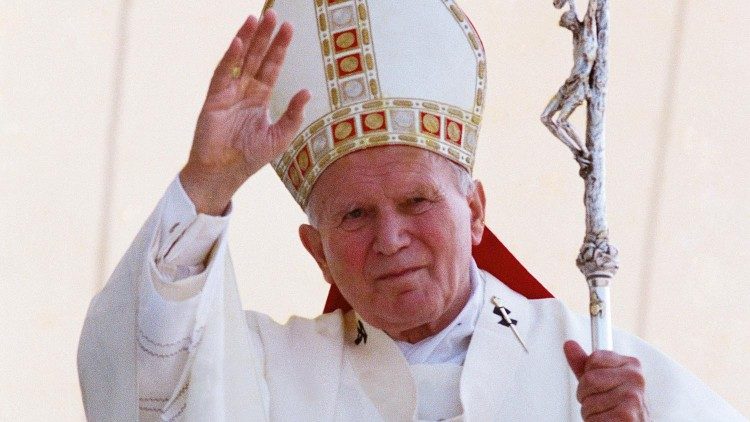
The Polish-born pope “built bridges in a world troubled by divisions and conflicts,” Duda also said.
He added that John Paul II’s “teachings and testimony still touch the hearts and minds of millions of people around the world, providing an inspiration for many religious, social, scientific and cultural initiatives.”
Duda also said in his message that Karol Wojtyła was a man of deep faith who “looked ahead with hope into the future of Poland, Europe and the world.”
While “shaping this future, we will always remember the greatest among us—the pope of freedom and solidarity,” Duda said.
Source: Polish Radio
Welcome
We are a group of long experienced European journalists and intellectuals interested in international politics and culture. We would like to exchange our opinion on new Europe and Russia.
Categories
- Breaking News (11)
- CIS (129)
- Climate (2)
- Energy&Economy (115)
- EU Eastern Dimension (85)
- Euro 2012 – Sochi 2014 – World Cup 2018, Sport (43)
- Euro-Integration (135)
- History Culture (198)
- International Policy (261)
- Military (74)
- Interviews (18)
- Italy – Italia – Suisse (47)
- Odd Enough (10)
- Poland and Baltic States (126)
- Religion (31)
- Russia (421)
- Survey (4)
- Turning points (4)
- Ukraine (176)
- Российские страницы (113)
Archives
- November 2020
- October 2020
- September 2020
- August 2020
- July 2020
- May 2020
- April 2020
- March 2020
- January 2020
- December 2019
- November 2019
- October 2019
- September 2019
- August 2019
- July 2019
- June 2019
- May 2019
- April 2019
- March 2019
- February 2019
- December 2018
- November 2018
- October 2018
- September 2018
- August 2018
- July 2018
- June 2018
- May 2018
- April 2018
- March 2018
- February 2018
- January 2018
- December 2017
- November 2017
- October 2017
- September 2017
- August 2017
- July 2017
- May 2017
- March 2017
- January 2017
- December 2016
- November 2016
- October 2016
- September 2016
- July 2016
- June 2016
- May 2016
- April 2016
- February 2016
- January 2016
- November 2015
- October 2015
- September 2015
- June 2015
- April 2015
- March 2015
- February 2015
- January 2015
- December 2014
- November 2014
- October 2014
- September 2014
- August 2014
- July 2014
- June 2014
- May 2014
- April 2014
- March 2014
- February 2014
- January 2014
- December 2013
- November 2013
- October 2013
- September 2013
- August 2013
- July 2013
- June 2013
- May 2013
- April 2013
- March 2013
- February 2013
- January 2013
- December 2012
- November 2012
- October 2012
- September 2012
- August 2012
- July 2012
- June 2012
- May 2012
- April 2012
- March 2012
- February 2012
- January 2012
- December 2011
- November 2011
- October 2011
- September 2011
- August 2011
- July 2011
- June 2011
- May 2011
- April 2011
- March 2011
- February 2011
- January 2011
- December 2010
- November 2010
- October 2010
- September 2010
- August 2010
- July 2010
- June 2010
- May 2010
- April 2010
- March 2010
- February 2010
- January 2010
- December 2009
- November 2009
- October 2009
- September 2009
- August 2009
Our books