Euro-Integration
Polish anti-defamation bill.
6 Feb 2018The bill that has angered Israel by imposing a jail term for anyone who accuses Poland of being complicit in the Holocaust.
The US State Department has urged Poland “to reevaluate the legislation in light of its potential impact on the principle of free speech.”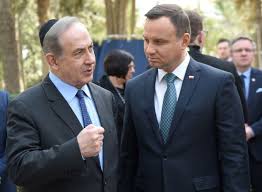
Reacting to President Duda’s move, Israel‘s foreign ministry said it hoped that “changes and corrections” would be made to the Polish anti-defamation law.
In Poland, the new rules are seen as a way of fighting the use of the phrase “Polish death camps”, which many say implies the country’s involvement in the Holocaust.
Poland has long fought the use of such phrases, which have often appeared in foreign media in relation to Nazi German-run extermination camps located in occupied Polish territory during World War II. Poland’s ruling conservatives have said such phrases distort history.
Czech ‘Berlusconi’ wins the elections.
23 Oct 2017One of central Europe’s richest men will begin the tricky task of building a ruling coalition after convincing Czech voters in weekend elections that he can stem immigration, fight corruption and banish the establishment from power.
Andrej Babiš, a tycoon turned populist politician who has been compared to Donald Trump and Silvio Berlusconi, confirmed that the Czech president would ask him next week to begin forming the next government. 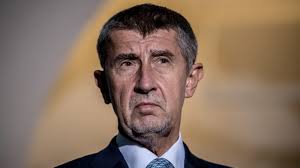
Babiš led his new party ANO – “ano” is Czech for “yes” – to a resounding poll victory, winning almost 30% of the vote.
The election ended a quarter of a century of political dominance by the traditional parties of the Czech mainstream, with the Social and Christian Democrats scoring just 7% and 6% respectively.
Voters largely turned their backs on liberal pro-European parties, with the centre-right Civic Democrats winning 11% of the vote, the direct democracy advocates of the Pirate party 10.6% and the far-right, anti–EU SPD 10.8%.
ANO will control 78 seats in the 200-member lower house.
Mr Babis’s current partners, the leftist Social Democrats of Prime Minister Bohuslav Sobotka and the centrist Christian Democrats, have rejected a government with ANO unless it pledges Mr Babis will not be part of it.
Babiš said he did not want a government that would include Communists and the anti-EU, anti-immigration SPD party, which made surprisingly a strong showing in the election.
С днем рождения, Европа!
25 Mar 2017 Европейский союз (ЕС) отмечает 60-ю годовщину первых Римских договоров… Мне здесь хотелось бы еще раз вернуться к функциям, которые выполняет ЕС, а они часто забываются. Во-первых, это — антифашистское сообщество. 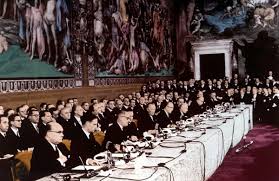
Во-вторых, он является противовесом опасным националистам, которые всегда сталкиваются между собой…пора определенным российским кругам смириться с тем, что появился новый серьезный партнер — конкурент в Старом Свете. Но конкурент не враждебный!…После падения Берлинской стены выросли поколения, которые знают только единую Европу без границ и единую монету, то есть евро. Их называют «поколением Эразмуса» (название, произошедшее от успешной университетской интеграционной программы ЕС)…
Статья – Джузеппе Д’Амато “Московский комсомолец” №27354 от 25 марта 2017 Giuseppe D’Amato Moskovskij Komsomolets
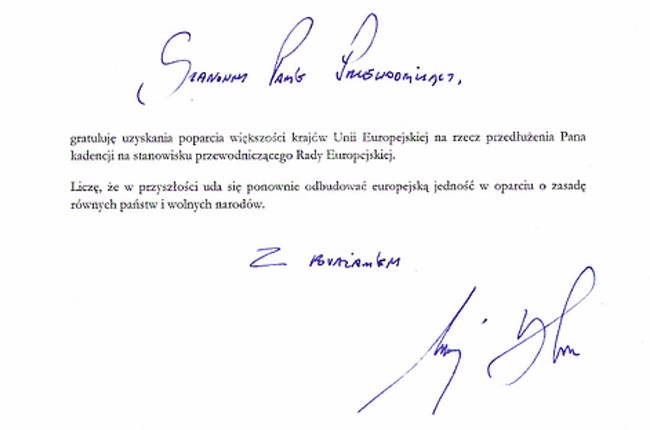
Верховная Рада приняла совместную с Польшей декларацию об ответственности СССР за начало войны.
20 Oct 2016Украинский парламент принял Декларацию памяти и солидарности сейма Республики Польша и Верховной Рады Украины по событиям Второй мировой войны. Об этом говорится в сообщении, опубликованном на сайте украинского парламента.
Ранее планировалось принятие декларации парламентами трех стран – Украины, Польши и Литвы. Однако из текста было исключено упоминание о сейме Литвы в связи с формированием в этой стране нового состава парламента, передает “Интерфакс”.
В декларации отмечается “великая историческая жертва народов Польши и Украины ради защиты свободы и независимости“. “Представители сейма Республики Польша и Верховной Рады Украины совместно и одновременно принимают эту Декларацию памяти и солидарности, чтобы почтить память миллионов жертв, которые понесли наши народы во время Второй мировой войны, и осудить внешних агрессоров, которые пытались уничтожить нашу независимость”, – говорится в документе. 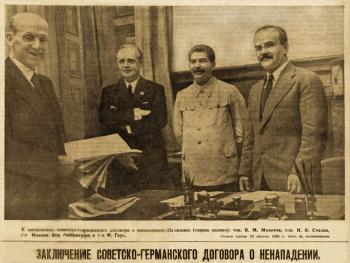
Ответственность за начало Второй мировой войны в декларации возлагается на нацистскую Германию и Советский Союз. По мнению авторов документа, пакт Молотова – Риббентропа, заключенный в 1939 году “между двумя тоталитарными режимами – коммунистическим Советским Союзом и нацистской Германией”, “привел к взрыву 1 сентября Второй мировой войны, вызванной агрессией Германии, к которой 17 сентября присоединился Советский Союз“.
“Следствием этих событий была оккупация Польши Германией и Советским Союзом и массовые репрессии против наших народов. Те события привели также к принятию в Ялте в 1945 году решений, которые начали новый этап порабощения всей Восточной и Центральной Европы, длившийся полвека”, говорится в декларации.
First Baltic gas pipeline without Russia.
15 Oct 2015Poland has signed a deal to build the first gas pipeline connecting the Baltic states to the EU energy market. The pipeline will integrate EU and Baltic energy markets and reduce dependence on Russian gas.
The 558 million euro ($636 million) gas pipeline will end the energy isolation of the Baltic countries by connecting the gas markets of Poland and Lithuania, the European Commission said
“Today we have done much more than bringing the energy isolation of the Baltic States to an end. We have brought the region further together,” European Commission President Jean-Claude Juncker said. “We are launching a project that will allow us to overcome historic limitations, including the direction of gas supplies from East to West,” PM Kopacz told a press conference.
The 534-kilometer (332-mile) Gas Interconnector Poland-Lithuania (GIPL) will be backed by a 305 million euro investment from the European Commission, which has set out the goal of creating an integrated European gas market and ensuring members have multiple supplies of energy. Once the GIPL is built, it will connect the Lithuanian, Estonian and Latvian gas network with the EU. The pipeline is scheduled to be completed by December 2019.
Earlier this week, PM Ewa Kopacz opened a liquefied natural gas terminal at the Baltic port of Świnoujście, northern Poland, which is yet another move expected to improve the energy independence of the country. The first shipment of LNG is expected to arrive from Qatar in December
L’Unione europea è nata per non essere potenza o soggetto geopolitico, ma uno spazio di democrazia e di economia di mercato con una valuta comune, in cui lo Stato di diritto e la difesa dei diritti umani siano garantiti a tutti. Questa l’idea dei “padri fondatori”.
Le crisi, importate dal 2007, stanno evidenziando la lontananza tra le teorie filosofiche e la dura realtà.
Ad esempio, per salvare l’euro si è intervenuti con politiche monetarie non convenzionali, fondi salva Stati concordati in notte insonni. E’ stata pure creata una sorta di unione bancaria per una futura comune politica fiscale.
Adesso, per risolvere il problema dei profughi, cosa ci si inventerà? Le poche centinaia di migliaia di disperati siriani, presenti sul territorio comunitario, sono soltanto l’avanguardia delle 11 milioni di persone, che hanno abbandonato le loro case dal 2011 ad oggi. 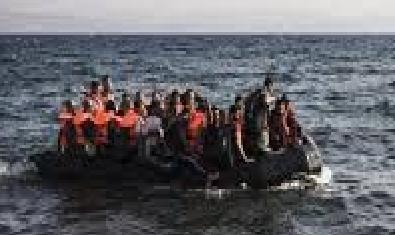
Barack Obama è stato eletto dagli americani per concludere le guerre e rimettere in ordine le casse dello Stato. Con la rivoluzione energetica Washington non ha più necessità di vegliare sulle rotte delle materie prime. Da qui anche il suo “non interventismo” in Medio Oriente ed Africa.
Gli europei non hanno capito che è finita l’epoca in cui l’alleato Usa toglieva le castagne dal fuoco. Il vuoto, creatosi nel bacino sud-orientale del Mediterraneo, è stato colmato dagli arabi del Golfo e dall’Isis.
Sorge spontanea una domanda: dov’è l’Unione europea in presenza di crisi gravissime? La politica estera comunitaria appare ancora spuntata, tanto che, mentre Berlino e Parigi sono presenti al tavolo sul conflitto ucraino, solamente britannici e francesi tentano di tenere alta la bandiera fuori dal Vecchio continente.
Non devono stupire le reazioni dei neo europei, quelli orientali, verso i migranti: stanno venendo a galla le contraddizioni dell’allargamento Ue ad Est del 2004, quando la “Casa europea” è diventata un condominio.
Questi popoli, ex “sudditi” del Cremlino, sono fuggiti allora da una pesante situazione geopolitica. Come non dare loro oggi torto alla luce dei tragici recenti avvenimenti ucraini? Questa gente condivide solo in parte certi valori.
Il fallimento delle “primavere” arabe con la mancata esportazione della democrazia, l’instabilità nello spazio ex sovietico e l’incognita cinese sono durissimi banchi di prova.
Se non si vogliono i rifugiati in casa propria bisogna fermare la guerra e l’anarchia, anche sporcandosi le mani. Se si intende limitare l’arrivo di migranti economici è necessario varare politiche di assistenza nei Paesi più poveri. La lezione di questi giorni è una: lo status quo e la paralisi, con interminabili summit, mettono in pericolo la comune coabitazione europea.
gda
EuroLithuania!
1 Jan 2015Lithuania is the 19th European state to adopt the continental currency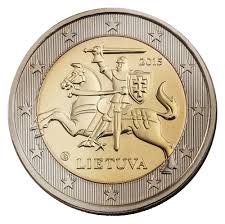 .
.
The euro gives the country more freedom in negotiating business with Russia, said Valdas Adamkus, who was president of Lithuania for about a decade until 2009. It provides an extra measure of geopolitical security.
At 0.4 percent, its inflation rate is just a hair above the euro zone average of 0.3 percent, and its 9.5 percent unemployment rate is right in the middle of the pack, and comfortably below the zone average of 11.5 percent. Lithuania’s 1.3 percent real GDP growth rate beats both of its Baltic partners and is again well above the -2.2 percent Euro Zone average.
Donald Tusk, New EU President.
1 Dec 2014 Today is my first day in office as President of the European Council. As you can imagine it is a very important day for me. And I hope that it is for you as well. If you are a little nervous about this replacement, the change of boss, don’t worry, I’m a little nervous, too. In fact it is a great honour for me to start working here. And of course a great challenge. 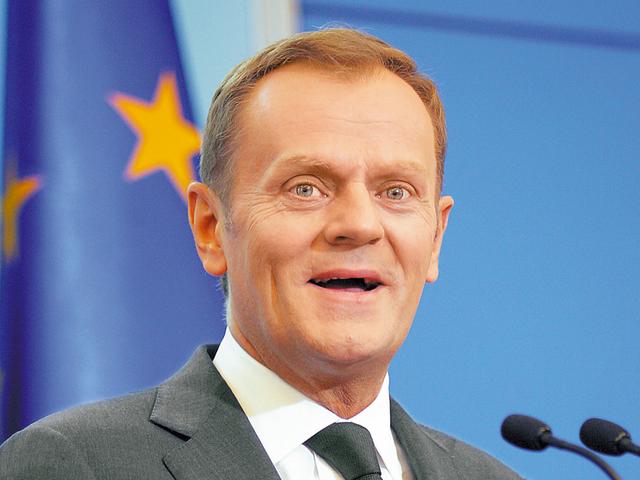 First and foremost because Herman Van Rompuy, our first permanent President, will be a tough act to And it is not a compliment, dear Herman, it is a fact. I am perhaps your greatest admirer in Europe. Not because you supported my election as your successor… or at least not only. It is no exaggeration when I say that you helped to steer us, to steer Europe out of the storm.
For five years – as one of the Prime Ministers around the table – I witnessed your skills: creating compromises; finding solutions; establishing trust, among often tough characters (I was no angel myself). Yes: Herman Van Rompuy in fact personifies traditional European political principles, which are also important to me: trust, common sense, moderation and decency. We all thank you for the excellent work you have done, Herman.
Dear colleagues, mes chers collègues, I also thank you for the great job you have done. I am aware of the importance of your work of protocol, of press, of interpretation, of translation, of security, of political advice, and all the other tasks and roles of this house. You were all an important part of Herman Van Rompuy’s success. And I d eeply believe that you will all be an important part of our future success. I come here with a strong sense of purpose. In these difficult times Europe needs success. And success for Europe, in the coming years, means in my opinion four things:
First, protecting our fundamental values: solidarity, freedom, unity against the threats to the Union and its unity coming from both inside and outside. Today, not only are eurosceptics questioning the EU’s value, the Union even has enemies. Politics has returned to Europe, history is back, and such times need leadership and political unity.
Second, we need ruthless determination to end the economic crisis. It is our responsibility to complete the genuine Economic Monetary Union. I take this task very seriously. And we must remember that our common currency, the Euro, is our advantage, not our disadvantage.
Third, the European Union must be strong internationally. Europe has to secure its borders and support those in the neighbourhood who share our values.
And fourth, the relations between Europe and the United States are the backbone of the community of democracies. Both we and the Americans are responsible for the future of our relations. The year ahead will be crucial. For all of these things, I will need your help at every step of the way. I already know a lot about your dedication, your determination, your expertise. That gives me great confidence. Confidence that we will work as a team.
Je me réjouis à l’idée de travailler avec vous. (That was French.)
Merci Dank u wel, Herman. Thank you. Dziękuję bardzo, Polsko.
EAST EUROPE. Dal crollo del Muro alle nuove sfide
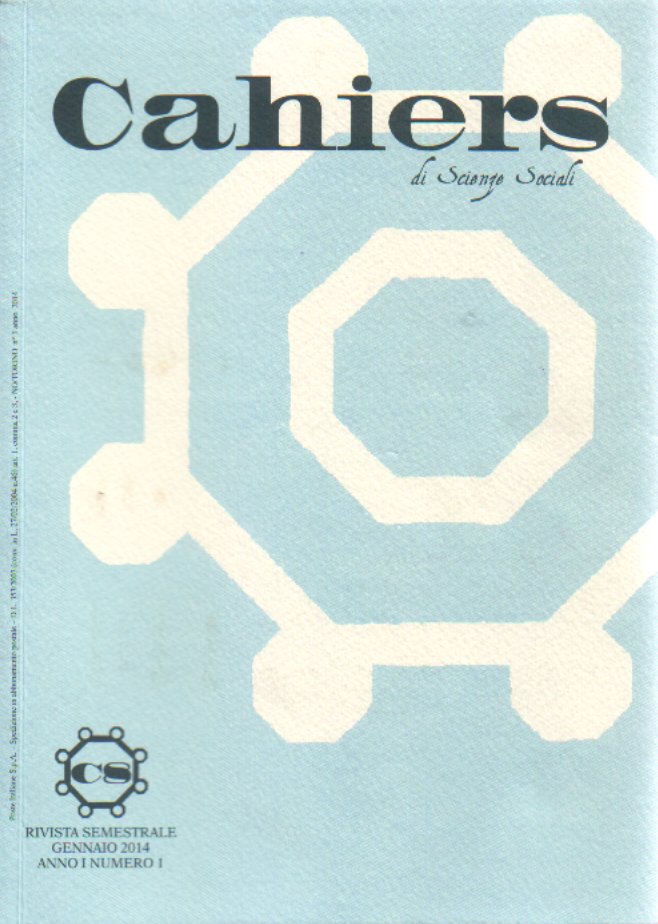
Cahiers n.1/2014
Numero monografico in onore di Renato Mieli, Dario Staffa, Pina D’Amato
A cura di Stefano Monti Bragadin e Giuseppe D’Amato
Presentazione
Eugenio Boccardo
Introduzione
Stefano Monti Bragadin
TESTIMONIANZE – TESTIMONIES
Lech Wałęsa: il mio 9 novembre 1989
Fulvio Scaglione
Tadeusz Mazowiecki: la Ddr era al capolinea
Luigi Geninazzi
François Fejtö: dal crollo dell’Urss alla globalizzazione
Almerico Di Meglio
Dmitrij Likhaciov: il Novecento, per fortuna, è finito!
Giuseppe D’Amato
L’Ostpolitik vaticana: modus vivendi, modus non moriendi
Francesco Strazzari
Oltre il muro si piange
Luigi Geninazzi
Un ospite dal passato
Stefan Scholl
GERMANIA – GERMANY
Gian Enrico Rusconi: la Storia sopra Berlino
Erminio Ferrari
The Berlin Republic: Evolution of Germany’s Politics of Memory and German Patriotism
Krzysztof Zalewski
Zwanzig Jahre Friedliche Revolution Heutige Sichten der Ostdeutschen
Gunnar Winkler und Reinhard Liebscher
The German Vision of NATO’s Future: the Alliance as a Building Block of Germany and Europe’s Security
Justyna Gotkowska
CONVERSAZIONI – DIALOGUES
Luigi Bonanate e Marco Revelli: l’eredità del Muro, la lunga vita del secolo breve
Erminio Ferrari
James Bissett: anni Novanta, un decennio perso
Giuseppe D’Amato
Viktor Kremenjuk: verso un mondo multipolare
Giuseppe D’Amato
FERITE SANGUINANTI – BLEEDING WOUNDS
Rambouillet ’99: trattativa o ultimatum?
Maurizio Cerruti
Polonia 2007: esqueletos en la memoria
Giuseppe D’Amato
Andrzej Wajda: Katyń, the Defeat of the Silence
Giuseppe D’Amato
UNIONE EUROPEA – THE EUROPEAN UNION
Unificazione monetaria europea e riforma dell’architettura finanziaria internazionale
Sergio Rossi
L’Europa fra euro-propositivi ed euro-scettici
Ugo Poletti
RUSSIA
Perché è crollata l’Urss: le «lezioni» di Egor Gajdar
Giuseppe Gatti
The EU and Russia’s Post-Soviet Economic Policy
Marco Fantini
The Ideology of Putinism
Anne Applebaum
La natura della Russia: Solgenitsin vs Pipes
Anna Rapotoueva
Come superare la crisi nazionale: riflessione sulla strategia di sicurezza della Russia
Viktor Kremenjuk
La Russie postsoviétique et ses frontières: bouleversements et ambiguïtés du rapport au monde extérieur
Ann de Tinguy
The New Great Game: a Breakthrough?
Aleksandra Jarosiewicz and Krzysztof Strachota
Il trust nell’ex Patria del comunismo
Giuseppe Lepore e Simona Peschiera
ALCUNE DELLE NUOVE SFIDE DEL XXI SECOLO – SOME OF THE NEW CHALLENGES IN THE 21st CENTURY
Arthur Chilingarov: the Arctic Race. Russia in Pole Position
Giuseppe D’Amato
Robert N. Huebert: the Militarization of the Arctic. The Canadian Point of View
Giuseppe D’Amato
Rod Lyon: l’Australia e il Pacifico nel XXI secolo
Giuseppe D’Amato
Is China a Rival or Partner? From the Japanese Perspective
Masafumi Iida
US War on Terror and Indian Security Interest
Anand Kumar
Demography, Migration and Population Policies
Joseph Chamie
The New Appeal of Nuclear Energy and the Dangers of Proliferation
Oliver Thränert
Welcome
We are a group of long experienced European journalists and intellectuals interested in international politics and culture. We would like to exchange our opinion on new Europe and Russia.
Categories
- Breaking News (11)
- CIS (129)
- Climate (2)
- Energy&Economy (115)
- EU Eastern Dimension (85)
- Euro 2012 – Sochi 2014 – World Cup 2018, Sport (43)
- Euro-Integration (135)
- History Culture (198)
- International Policy (261)
- Military (74)
- Interviews (18)
- Italy – Italia – Suisse (47)
- Odd Enough (10)
- Poland and Baltic States (126)
- Religion (31)
- Russia (421)
- Survey (4)
- Turning points (4)
- Ukraine (176)
- Российские страницы (113)
Archives
- November 2020
- October 2020
- September 2020
- August 2020
- July 2020
- May 2020
- April 2020
- March 2020
- January 2020
- December 2019
- November 2019
- October 2019
- September 2019
- August 2019
- July 2019
- June 2019
- May 2019
- April 2019
- March 2019
- February 2019
- December 2018
- November 2018
- October 2018
- September 2018
- August 2018
- July 2018
- June 2018
- May 2018
- April 2018
- March 2018
- February 2018
- January 2018
- December 2017
- November 2017
- October 2017
- September 2017
- August 2017
- July 2017
- May 2017
- March 2017
- January 2017
- December 2016
- November 2016
- October 2016
- September 2016
- July 2016
- June 2016
- May 2016
- April 2016
- February 2016
- January 2016
- November 2015
- October 2015
- September 2015
- June 2015
- April 2015
- March 2015
- February 2015
- January 2015
- December 2014
- November 2014
- October 2014
- September 2014
- August 2014
- July 2014
- June 2014
- May 2014
- April 2014
- March 2014
- February 2014
- January 2014
- December 2013
- November 2013
- October 2013
- September 2013
- August 2013
- July 2013
- June 2013
- May 2013
- April 2013
- March 2013
- February 2013
- January 2013
- December 2012
- November 2012
- October 2012
- September 2012
- August 2012
- July 2012
- June 2012
- May 2012
- April 2012
- March 2012
- February 2012
- January 2012
- December 2011
- November 2011
- October 2011
- September 2011
- August 2011
- July 2011
- June 2011
- May 2011
- April 2011
- March 2011
- February 2011
- January 2011
- December 2010
- November 2010
- October 2010
- September 2010
- August 2010
- July 2010
- June 2010
- May 2010
- April 2010
- March 2010
- February 2010
- January 2010
- December 2009
- November 2009
- October 2009
- September 2009
- August 2009
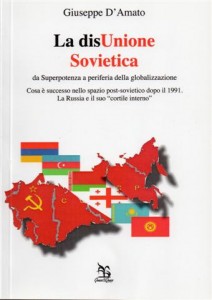
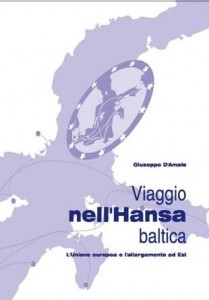
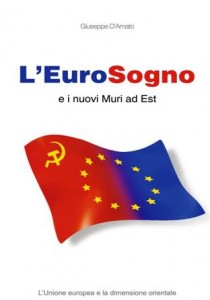
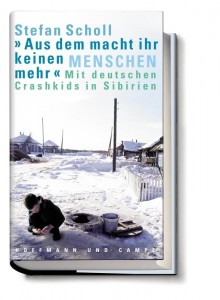
Our books