Poland and Baltic States
The entire Rail Baltica line is supposed to pass through Poland, Lithuania, Latvia and Estonia, covering 950 km between Warsaw and Tallinn. 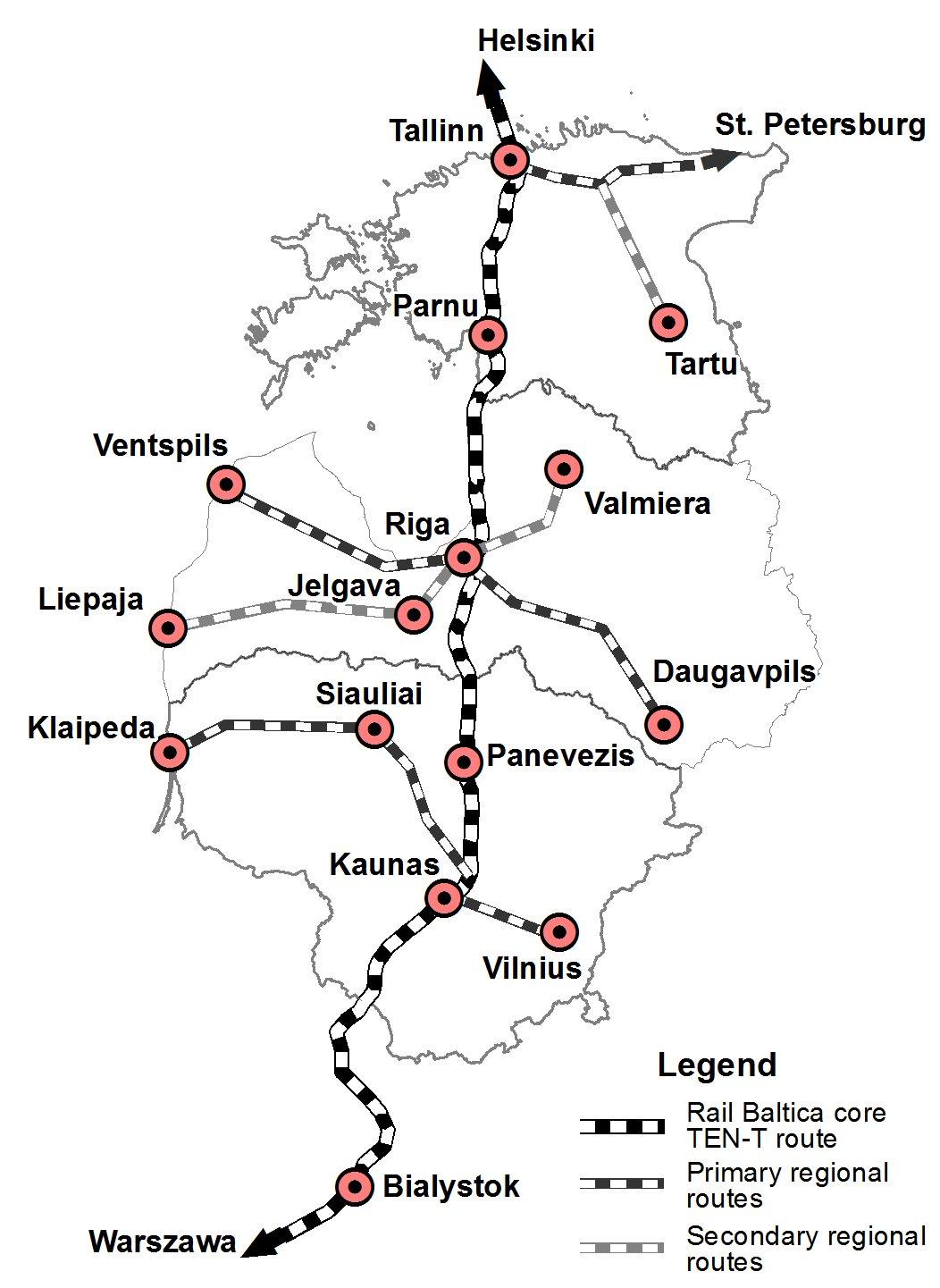
As former parts of the Soviet Union, the three Baltic states still have railway tracks that are incompatible with the European ‘Standard Gauge‘, and the new line would be built according to the latter specifications.
Although Poland already uses Standard Gauge, it would still need to upgrade its railway line from Warsaw to Trakiszki on the Lithuanian border so that trains can travel at high speed.
According to Lithuanian Prime minister Algirdas Butkevicius, Polish government has ‘promised’ to carry out the upgrade, and the entire Rail Baltica line is due to be completed by 2024.
Construction costs will be covered by the EU’s Structural and Cohesion Funds, as well as the budgets of the countries involved.
Radio Polska, LETA.
John Paul II’s personal papers are to be published by the Krakow-based Znak Publishing Institute, even though the late Polish Pope asked for the documents to be burnt after his death.
Znak’s director Henryk Wozniakowski said the papers include the Pope’s prayers and reflections as well as notes showing the Pope’s concern for those dear to him and for the Church.
The 640-page book, entitled ‘I am in God’s hands. Personal notes 1962-2003’ will hit the bookstores on 5 February.
In his will, John Paul II wanted his notes burnt after his death but his personal secretary, Stanisław Dziwisz, now the Archbishop of Kraków, did not fulfil the Pope’s wish.
Explaining his decision in the preface to the book, Dziwisz,writes that the Pope’s personal notes are of historical importance and “the key to interpreting his spirituality, his innermost self: his relationships with God, others and himself”.
Pope John Paul II will be canonized, together with Pope John XXIII, on 13 April.
Source: Radio Polska
Poland, No conspiracy in Sikorki’s death.
3 Jan 2014A five-year investigation into the death of Polish World War II leader General Wladyslaw Sikorski has found no evidence to support conspiracy theories that he was murdered.
Institute of National Remembrance (IPN) has found no proof that Poland’s wartime prime minister was either murdered prior to the flight, or that the plane crash itself was caused by sabotage. 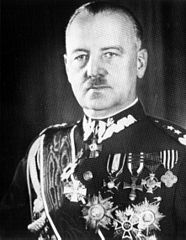
In a statement, IPN concluded that there is “no reasonable doubt” in the question of his boarding the plane alive.
The Polish leader’s death on 4 July 1943 remains a riddle to many, in spite of an official wartime investigation that claimed the crash was an accident.
Sikorski, who headed the Polish government-in-exile in London, was flying back to England after visiting Gibraltar when his Liberator plane plunged into the sea, shortly after take-off.
Apart from the pilot, who survived with broken limbs, all aboard apparently died immediately, although some bodies were never recovered, further fuelling conspiracy theorists.
Accusations have been levelled at Russia, Britain and a clique of Polish army officers over the years.
An official British military investigation blamed the crash on jammed controls in the cockpit.
As revealed in March 2013 by Piotr Dabrowski from IPN, besides archival work, two witnesses have been interviewed for the current probe in England and Spain.
The first was a radio operator who participated in the British navy’s salvage operation, immediately after the plane went down. The second was a diver who helped extract bodies from the wreck.
Claims that Sikorski had been murdered prior to take off were largely dispelled following the exhumation of his remains in 2008 at Wawel Cathedral, Krakow.
Noted British historian Professor Norman Davies told that “no reputable historian” had ever insisted that sabotage was the cause of Sikorski’s death.
Polskie Radio – Articles
Lithuania adopts the euro.
1 Jan 2014 Lithuania is the 19th European state to adopt the continental currency. 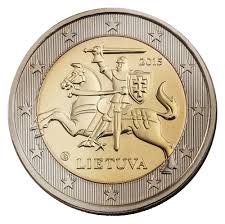 The euro gives the country more freedom in negotiating business with Russia, said Valdas Adamkus, who was president of Lithuania for about a decade until 2009. It provides an extra measure of geopolitical security.
At 0.4 percent, its inflation rate is just a hair above the euro zone average of 0.3 percent, and its 9.5 percent unemployment rate is right in the middle of the pack, and comfortably below the zone average of 11.5 percent. Lithuania’s 1.3 percent real GDP growth rate beats both of its Baltic partners and is again well above the -2.2 percent Euro Zone average.
UN annual climate conference in Warsaw.
11 Nov 2013” Negotiators from around the world begin meeting in Warsaw for an annual climate conference. In the past, Poland has made its mark by blocking the EU from calling for stricter greenhouse gas emissions limits. 
For Christiana Figueres the facts are clear. “There is a very real necessity to reduce greenhouse gas emissions,” said the UN Framework Convention on Climate Change’s executive director. A report from the UN environment agency UNEP released at the beginning of November showed just how real this necessity is: we can only meet the target of limiting global warming to 2 degrees Celsius (3.4 degrees F) if greenhouse gas emissions worldwide are drastically reduced in the years leading up to 2020….
The likelihood that big countries come forward at during the climate conference in Warsaw, which begins Monday (11.11.2013) with binding promises to reduce their emissions is low. This is partly due to the fact that the European Union has so far failed to set a good example by agreeing on an ambitious goal for its own carbon dioxide reductions…. “
Full Article – Deutsche Welle
Disappointment. This is Polish feeling for the ruling that the European Court of Human Rights is incompetent to judge whether Russia’s investigation into the 1940 Katyn killings of Polish war prisoners was insufficient.
Foreign Minister Radoslaw Sikorski said that the court’s Grand Chamber had “declined to give a clear judgement.” 
“Poles, including the Polish government, will not cease in their efforts to clarify all aspects of this heinous crime, while also striving for the full rehabilitation of the victims,” he insisted.
The process of rehabilitation is normally applied to those unjustly sentenced in court, and it would clear the victims of any stain on their honour under Russian law.
Sikorski noted nevertheless that the court had “clearly indicated that the Russian Federation did not provide this case and the court itself with sufficient cooperation.”
The court’s Grand Chamber had ruled that the adequacy of Russia‘s 1990-2004 investigation into the WWII massacres cannot be assessed, as the European Convention on Human Rights only came into force in Russia in 1998, eight years after Russia’s Katyn investigation began.
Polish foreign ministry issued an official statement, reiterating Sikorski’s comments, adding that Poland will also continue to demand that Moscow hands over all outstanding case files from its Katyn investigation.
The Katyn killings have been casting a shadow over relations between Poland and Russia for many years now, with Warsaw especially disappointed that Moscow was not willing to transfer documents concerning the massacre for further analysis.
The European court agreed that Russia had failed in this regard by refusing to submit a key procedural decision from the investigation and offered no substantive reason for maintaining its classified status.
From PAP – Radio Poland.
“Effective from October 7, Russia has banned the imports of Lithuanian dairy products. The Consumer Protection and Sanitary Inspectorate (Rospotrebnadzor) chief, Gennady Onishchenko, announced the ban…Moscow has not provided any evidence to substantiate its ostensible concerns about food safety…Russia resorts to trade warfare-type measures against neighboring countries (members as well as non-members of the European Union) periodically and selectively…
It is now targeting the European Union’s incumbent presiding country, Lithuania. It no longer bothers to answer Lithuanian and EU inquiries about the basis for complaints. On other fronts, Russia is currently imposing (and threatening to impose more) arbitrary restrictions on trade with the EU’s Eastern Partnership countries—Ukraine, Moldova and Georgia…These countries are set to conclude association, free-trade, and travel visa liberalization agreements with the EU at the Eastern Partnership’s summit on November 28–29 in Lithuania. The Kremlin seeks to derail that process… ”
Full Article – Vladimir Socor – The Lithuania Tribune.
Today we attended the Wilton Park conference, The Eastern Partnership: moving ahead, which included participants from across the EU and from Eastern Partner countries. The Eastern Partnership, with its focus on the future prosperity of Eastern Europe, is at the top of our agendas. Today’s discussion helped shape that future direction. 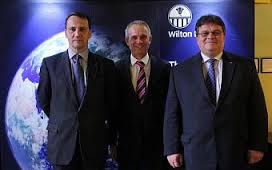
On the 28-29 November, Lithuania will host the third Eastern Partnership Summit in Vilnius. This will be an important moment for the EU and Eastern Europe. The possibility of Ukraine signing its Association Agreement, including a Deep and Comprehensive Free Trade Area, and Moldova and Georgia initialing agreements, will be important milestones towards redefining and strengthening the EU’s relationship with our Eastern European partners.
Eastern partners have already made significant irreversible and sustainable political and economic reforms, which will benefit their citizens. As they continue to grow they need to continue to implement further reforms. Liberalised economies, open and inclusive politics, and respect for the rule of law are all key building blocks for prosperity in the EU from which our eastern partners and others can benefit. We are ready to support partner countries in their efforts to implement reforms and the Association Agreements.
As we look towards the future we hope to see an Eastern Partnership that supports those seeking an ever closer relationship with the EU, and for some eventual EU membership, that supports open economic polices, inclusive democracy and that sustains respect for the rule of law, and we will do all that we can to ensure it.
Linas Linkevičius, Minister of Foreign Affairs of the Republic of Lithuania
Radosław Sikorski, Minister of Foreign Affairs of the Republic of Poland
David Lidington, Minister of State, Foreign and Commonwealth Office, United Kingdom
London – 14 October 2013
Polish emigration close to record level.
14 Oct 2013 According to as of yet unpublished figures from Poland’s Central Statistical Office (GUS), over 2 million Poles were living abroad at the close of 2012.
The data, seen by the Rzeczpospolita daily, marks an increase of about 70,000 since 2011 and 130,000 since 2010.
“If we consider this alongside the demographic trend – the larger number of deaths than births – then we should tell ourselves clearly that the time has come to stop hiding our heads in the sand and that we must take action,” says Professor Krystyna Iglicka from Warsaw’s Lazarski University.
In 2012, Poland’s lower house of parliament passed a law raising the age of retirement to 67 for both sexes, in a bid to combat the changing ratio between workers and pensioners, which is currently 3:1, but may be as high as 1: 1 in 2060.
Around 1.5 million Poles living abroad are below the age of 39 and 726,000 are between 25 and 34.
The most dramatic phase of the exodus was in the first three years after Poland joined the European Union in 2004.
Article – Radio Polska – October 7, 2013.
The exhibition consists of memorabilia related in various ways to the Prince, from the collection of the National Museum in Krakow. 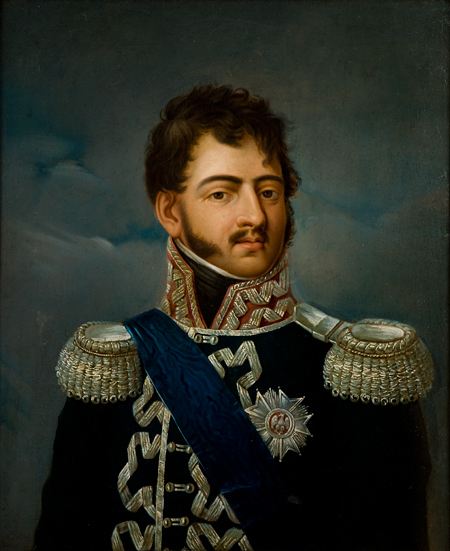
Józef Antoni Poniatowski was born on 7 May 1763 in Vienna to Andrzej Poniatowski and Teresa Kinsky. Bound for a military career, he eventually received the rank of General and became the Marshal of France; he was later announced as the Minister of War and Head of the Army of Warsaw County. On 19 October 1813, while covering the retreat of Napoleon’s forces during the Battle of Leipzig, Prince Józef was killed. His body, pulled out of water after five days, was brought back to Warsaw and buried in the Church of the Holy Cross a year later. His final interment took place on 23 July 1817 in St. Leonard’s Crypt at Wawel Cathedral.
The Prince was a singular character, famous for his military talents and outstanding courage, but also for his adventurous, even extravagant lifestyle, which contributed to his legend when illustrated in numerous works of high and popular art.
As a young man, he was a favourite with the Warsaw ladies, who gave him the nickname of Pepi.
With Poland being progressively partitioned during his uncle’s reign, the young Poniatowski ultimately fought in the anti-Tsarist Kosciuszko Insurrection of 1794.
After Poland had been wiped from the map, he joined forces with Napoleon, who in 1807 created the so-called Duchy of Warsaw, supposedly the kernel of a resurgent Poland.
However, the 1812 campaign, which Bonaparte dubbed his “second Polish war,” ended in disaster, and Poniatowski fell the following year at the Battle of Leipzig.
Legend recounts that the prince spurred his horse into the currents of the River Elster after refusing to surrender, a scene that duly became a staple subject for 19th century Polish painters.
The most common depiction of Prince Józef presents him in a military uniform decorated with medals and a sash across his chest. On the portrait donated to the National Museum’s collection by Adam Wolański in 1906, he is wearing the “great” uniform of the Division Commander, the sash of the Order of the White Eagle, and the star of the Legion of Honour, which he received in 1809. In the same year, Poniatowski was awarded with the highest Polish military decoration – The Grand Cross of the Virtuti Militari Order.
For over a century, he remained the only Pole decorated with such a prestigious medal. The star to the Grand Ribbon of the Virtuti Militari Order is the most precious element of our exhibition.
After the Prince’s death, the star was allegedly brought to Poland by his valet. His heirs then sold it to Henryk Stecki, who presented it as a gift to Emeryk Hutten-Czapski in 1873. The decoration was eventually incorporated into the National Museum’s collection, together with other donations from Hutten-Czapski. In 2006, the unique relic experienced another turn in its history, when it was stolen from an exhibition in Warsaw. Thought to be lost forever, the missing order was eventually found in the Ukraine and re-joined the national collection in 2008.
The exhibition runs at the central branch of the Historical Museum of the City of Krakow until 11 November.
From National Museum in Krakow site
Welcome
We are a group of long experienced European journalists and intellectuals interested in international politics and culture. We would like to exchange our opinion on new Europe and Russia.
Categories
- Breaking News (11)
- CIS (129)
- Climate (2)
- Energy&Economy (115)
- EU Eastern Dimension (85)
- Euro 2012 – Sochi 2014 – World Cup 2018, Sport (43)
- Euro-Integration (135)
- History Culture (198)
- International Policy (261)
- Military (74)
- Interviews (18)
- Italy – Italia – Suisse (47)
- Odd Enough (10)
- Poland and Baltic States (126)
- Religion (31)
- Russia (421)
- Survey (4)
- Turning points (4)
- Ukraine (176)
- Российские страницы (113)
Archives
- November 2020
- October 2020
- September 2020
- August 2020
- July 2020
- May 2020
- April 2020
- March 2020
- January 2020
- December 2019
- November 2019
- October 2019
- September 2019
- August 2019
- July 2019
- June 2019
- May 2019
- April 2019
- March 2019
- February 2019
- December 2018
- November 2018
- October 2018
- September 2018
- August 2018
- July 2018
- June 2018
- May 2018
- April 2018
- March 2018
- February 2018
- January 2018
- December 2017
- November 2017
- October 2017
- September 2017
- August 2017
- July 2017
- May 2017
- March 2017
- January 2017
- December 2016
- November 2016
- October 2016
- September 2016
- July 2016
- June 2016
- May 2016
- April 2016
- February 2016
- January 2016
- November 2015
- October 2015
- September 2015
- June 2015
- April 2015
- March 2015
- February 2015
- January 2015
- December 2014
- November 2014
- October 2014
- September 2014
- August 2014
- July 2014
- June 2014
- May 2014
- April 2014
- March 2014
- February 2014
- January 2014
- December 2013
- November 2013
- October 2013
- September 2013
- August 2013
- July 2013
- June 2013
- May 2013
- April 2013
- March 2013
- February 2013
- January 2013
- December 2012
- November 2012
- October 2012
- September 2012
- August 2012
- July 2012
- June 2012
- May 2012
- April 2012
- March 2012
- February 2012
- January 2012
- December 2011
- November 2011
- October 2011
- September 2011
- August 2011
- July 2011
- June 2011
- May 2011
- April 2011
- March 2011
- February 2011
- January 2011
- December 2010
- November 2010
- October 2010
- September 2010
- August 2010
- July 2010
- June 2010
- May 2010
- April 2010
- March 2010
- February 2010
- January 2010
- December 2009
- November 2009
- October 2009
- September 2009
- August 2009
Our books