Poland and Baltic States
During Euro 2012 Poland will issue Schengen visas to Ukrainian citizens if they have the tickets for football matches. The decision was taken after consultations between the two MFA. Joint consular offices will help citizens attending football matches abroad.
In 2010 Poland issued the 33% of all Schengen visas given to Ukrainian citizens in Ukraine and 14,487 in the first six months of 2011. Warsaw supports Ukraine’s efforts aiming at further liberalization of the visa regime with the European Union.
Primo luglio 2011. La Polonia è in festa. Il Paese dalla “tanta storia e poca geografia” ha assunto per la prima volta la presidenza dell’Unione Europea, completando quel durissimo percorso iniziato subito dopo l’uscita dalla sfera di influenza sovietica alla fine della Guerra Fredda. 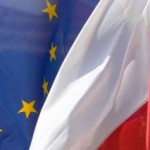
La Polonia è oggi un esempio di democrazia normale e moderna con un’economia solida e dinamica. Ma non sono state tutte rose e fiori per ottenere questo risultato. Il referendum di adesione all’Ue, con la discesa in campo persino di Papa Wojtyla, fu vinto a fatica nel giugno 2003. Quanta la paura dell’ennesimo scherzo della storia! Ricordiamo ancora le lacrime della gente, quando, nella notte del primo maggio 2004, la bandiera europea salì nel cielo di Varsavia a piazza Pilsudski, mentre il mattino successivo il centro cittadino fu paralizzato dalla protesta di migliaia di euroscettici. Le successive elezioni dell’autunno 2005 furono vinte dai gemelli Kaczynski alla testa di un partito che radunava scontenti ed ultra-conservatori.
I pesanti costi sociali per l’adesione all’Ue sono stati mitigati dai fondi strutturali (67 miliardi dal 2007 al 2013), giusta compensazione dell’Occidente per aver abbandonato la Polonia per quattro decenni nelle mani dei sovietici. Il boom economico, aiutato dai forti investimenti stranieri – soprattutto d’oltreoceano -, ha fatto il resto. Le città si sono arricchite tanto che si fa fatica a riconoscerle rispetto a come erano all’inizio del secolo. Finalmente i polacchi sono diventati fiduciosi nell’Unione. In un sondaggio gli euroentusiasti sono vicini all’80%.
Nella sua qualità di presidente dell’Ue la Polonia gestirà la complessa trattativa per la definizione del budget continentale 2014-2021. La Commissione europea le ha già garantito ben 80 miliardi di euro di nuovi fondi strutturali sui 972,2 del bilancio totale continentale. Varsavia intende aprire la strada all’Associazione all’Ue dell’Ucraina, Paese vicino col quale ospiterà la tanto attesa vetrina degli Europei di calcio nel prossimo giugno 2012, concludere i negoziati con la Croazia e migliorare ulteriormente i rapporti con la Russia.
In Europa ci sono anche esempi positivi non solo la Grecia o i PIGS o l’Italia che balbetta da un decennio. L’economia di Varsavia viaggia a tassi di espansione “alla tedesca”. Ecco perché la Polonia di Donald Tusk si candida a diventare una “Spagna”, ma dalle fondamenta salde, di questo decennio.
Giuseppe D’Amato
100 years since the birth of Milosz.
30 Jun 2011June 30th, 2011 marks the 100th anniversary of the birth of Nobel Prize winning poet Czeslaw Milosz. Polish President Bronislaw Komorowski has inaugurated an International Centre of Dialogue in an estate in Krasnogruda, close to the Lithuanian border. The ceremony was attended by the poet’s son, Anthony Milosz, and by representatives of Polish and Lithuanian governments. The house belonged to the family of the poet’s mother.
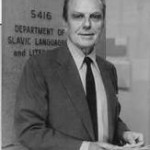
University of California
Czeslaw Milosz was born in present-day Lithuania, to partly Polish, partly Lithuanian parents, and was brought up in the multinational milieu of Vilnius. He graduated from the University of Vilnius with a degree in law. In 1951, Milosz appealed for political asylum in Paris, then in 1960, he moved from France to the United States. He taught for many years at the University of California, Berkeley. After the fall of communism, the poet returned to Poland and spent the last years of his life in Krakow, where he died in 2004, at the age of 93.
His best known work was The Captive Mind, which looked at the treatment of intellectuals under communist rule. His poetry was widely acclaimed internationally, but it was not until 1973 that his work was translated into English, allowing it to be appreciated by a wider audience.
For Lithuanian President Dalia Grybauskaite laying a memorial plaque at Vilnius University the poet’s work is a testament to Polish-Lithuanian solidarity. The most important event of the Milosz Year was the Literary Festival, which took place in Krakow from May 9th to May 15th .
Milosz’s Year – Site.
Our Polish EU Presidency.
30 Jun 2011
Logo
Polish Prime Minister Donald Tusk presented information in Parliament concerning the priorities of the Polish Presidency, which will commence on 1 July this year. The Prime Minister emphasised that during the Presidency the government wants not just to maintain but to increase Poland’s status as a responsible and highly valued state.
“It is expected that the Presidency will allow us to jointly create political leadership which does not consist of taking routine decisions but which may help the EU as a whole,” he said. “It is of paramount importance that during the Presidency we can maintain and increase Poland’s status as a country which is highly valued in internal EU debates and which demonstrates a high level of responsibility with regard to the EU’s foreign relations,” he underlined, adding that Poland will also want to maintain and increase its status as a responsible country in dealing with economic and financial issues.
The Prime Minister stressed that Poland has developed its image as a state which is capable of being a new driving force in the European Union. “Today Poland is treated as one of the leaders – of which unfortunately there are few in the EU – which strive to force through issues of EU-wide significance,” stated the Prime Minister. In his view, from the beginning of the economic crisis Poland constantly came out against the revival of state control and nationalism which was visible in the actions and statements of some politicians and EU Member States.
Mr Tusk drew attention to the fact that it is important for good political initiatives to emerge during the Polish Presidency. “We have a significant interest in Poland’s Presidency being remembered by Europeans through issues including the finalising of long-term processes,” he said. “It is possible that during the Polish Presidency we will see the completion of negotiations with Croatia, which would mean that the accession treaty will be signed during the Presidency,” stated the Prime Minister. He added that completion of negotiations with Ukraine on an association agreement and agreement on free trade is also realistic. “This would be the first successful step in the process of bringing Ukraine closer to Europe,” the Prime Minister stated.
Full article – Polish Presidency of the EU.
Baltic region. New challenges, old adversaries.
20 Jun 2011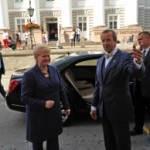 How to prevent future threats to the Baltic region was the main topic at the Estonian – Lithuanian summit, held in Tartu. The two states seek to become NATO’s energy and cyber security hubs not forgetting a recent period of tension with Russia.
Estonian President Toomas Hendrik Ilves assured the support of his country in developing the energy security centre in Lithuania into a NATO Centre of Excellence, as the alliance’s cyber defence centre in Tallinn. His Lithuanian colleague Dalia Grybauskaite highlighted that both countries are united by the common goal of preventing the use of energy as a political tool. It is therefore necessary to speed up the integration of the Baltic States’ electricity market into the Nordic market (NordPool), to diversify energy supplies and to reduce dependence on a single supplier.
Mrs. Grybauskaite said that his country supported the construction of a LNG terminal in Estonia or in Latvia, but it had decided to build its own terminal in Klaipeda. She pointed out that several terminals operating in the Baltic countries would increase competition in the gas market, ensure lower consumer prices and strengthen the region’s energy independence.
“Estonia is still interested in participation in the Visaginas nuclear power station,” President Ilves assured, adding that Eesti Energia is currently considering the offers of two potential investors. “Let us hope that the negotiations for finding and involving a strategic investor will be successful and the new nuclear power station will be a project that will really enhance the energy security and independence of the region considerably.”
Speaking about cyber security, Mrs. Grybauskaite proposed to follow the recommendations of the former foreign minister of Norway, Jens Stoltenberg, and to form a Nordic-Baltic cyber defence force.
For a further European integration Mr. Ilves said that “When can we take a high-speed train from Estonia, through Latvia and Lithuania, to Berlin? When will we finally have a modern Via Baltica, which connects all of us and then runs further, to Poland? When will the Baltic states no longer be an energy isle, separated from the rest of Europe? The answers to these questions will also represent our evaluation of the health of our regional co-operation in the 21st century.”
Presidents Ilves and Grybauskaite discussed the neighbourhood policies of the European Union, with an emphasis on Ukraine, Georgia, Moldova and Belarus.
“The government in Minsk, which talks to its people in the language of batons and imprisonment, is not fit to be a part of today’s Europe. In this case, the European Union should use powerful words to provide balance, by uniting its voice with its mind; the pressure on the Belarusian regime needs to be powerful and efficient, with all sanctions very accurately aimed,” President Ilves added.
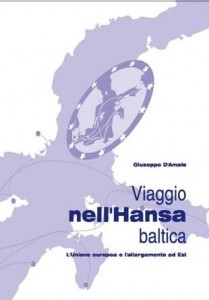
Travel to the Baltic Hansa, book by Giuseppe D’Amato.
 “Around two out of three Poles think preparations for the Euro 2012 football championships are not going well and three out of four are pessimistic about the national team’s chances at the finals, finds a new poll.
The survey by Homo Homini, commissioned by Polish Radio found that 60 percent of respondents think that construction work in Warsaw, Gdansk and other cities hosting the event are proceeding poorly, with 22 percent thinking preparations are going well, while 18 percent have no opinion on the issue.
As regards preparations by the national team, led by coach Franciszek Smuda, 75 percent of Poles are not expecting success at the finals.
The poll was taken, however, before Poland’s 2-1 win over Argentina in Warsaw on Sunday, with goals from Adrian Mierzejewski and Pawel Brozek for the home side and Marco Ruben for the visitors.
Though a good result for Poland, Argentina put out a second-string 11 without stars such as Lionel Messi, Javier Mascherano, Javier Pastore, Carlos Tevez and Gonzalo Higuain.
Poland’s final game of the season comes against France on Thursday, which was meant to take place at the PGE Gdansk stadium in the north – but due to incomplete preparations it has had to be moved to Legia Warszawa’s venue in the capital.
Government optimistic
Sports Minister Adam Giersz, however, has said he is confident that everything will be ready for the finals next summer.
“The venues will be up and running well ahead of the first whistle,” he told Polish Radio. “Construction should be ready a year before the event although there may be slight delays with the National Stadium in Warsaw and maybe with the one in Wroclaw [western Poland],” the sports minister added. He argued that many previous host countries reported delays in their preparations and yet the tournaments took place as scheduled.“The construction of the stadium in South Africa was completed only a month before the [2010] World Cup,” said Giersz.
Marcin Herra, head of PL2012, the company supervising the preparation process, says that 70 of the construction work is being carried out according to the schedule. The remaining 30 percent has caused some delays to road and railway construction, including the renovation of the central train stations in Warsaw and Poznan”.
Source – Polskie Radio.
The Polish Constitution of May 3, 1791, was the first Fundamental Law adopted in Europe and the second world’s Constitution after that of the United States in 1787. The document was a secret project and its final version was drafted among others by the politician and thinker Hugo Kołłątaj.
The Sejm session which led to the adoption of the Constitution was held in an atmosphere of a coup d’état. Many deputies came to the Royal Castle in Warsaw, where the session was taking place, in secrecy and the castle was guarded by numerous troops. After a heated, but short debate, the Fundamental Law was adopted with a majority of votes.
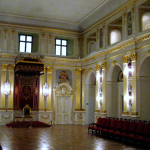
- Chamber of Senate at the Royal Castle in Warsaw – wikipedia.org
The Constitution of 1791 comprised 11 articles. It introduced the principle of independence for the nobility and townspeople and the separation of powers between the Legislature (a bicameral Sejm), the Executive and the Judiciary branches.
Peasants came under the protection of the law and government. This was the first step toward the ending of serfdom. The Constitution provided for “ordinary” meetings of the Sejm once in two years and special sessions when required by national emergency. The Lower Chamber, called the Chamber of Deputies, was made up of 204 deputies and plenipotentiaries of 24 royal cities. The Upper Chamber of Senators comprised 132 senators, including province governors, castellans, government ministers and bishops. The Constitution abolished the liberum veto.
The Executive power was in the hands of a royal Council, known as the Guardians of the Laws. This Council was presided over by the King and included five ministers appointed by him: the minister of police, the minister of the seal (internal affairs), the minister of the seal of foreign affairs, the minister of war, and the minister of the Treasury. The decrees issued by the King required countersignature by a minister.
To enhance the unity and security of the Commonwealth, the Fundamental Law abolished the Union of Poland and Lithuania in favour of a unitary State. This decision was the end of the Union of the Crown of Poland and the Grand Duchy of Lithuania, which had been established in 1569. The Constitution changed the free royal election system to a dynastic elected monarchy, which was meant to reduce the influence of foreign powers in royal elections.
The Constitution acknowledged the Roman Catholic faith as the dominant religion, but at the same time it guaranteed freedom to all religions.
The Constitution of May 3rd remained an unfinished work. It was in effect for only one year before Poland lost its independency. The last attempt at preserving the its legacy was the insurrection led by Tadeusz Kościuszko. In 1794, in Cracow, he issued the unprecedented “Proclamation of Połaniec,” granting freedom and ownership of land to peasants who fought in the insurrection. The insurgents had some initial victories, but then the armies of Russia, Austria and Prussia launched a military crackdown. The defeat of Kościuszko’s forces led in 1795 to the third and final partition of Poland.
May 3rd was restored as an official Polish holiday in April 1990, after the fall of communism. In 2007, May 3rd was in addition declared a Lithuanian national holiday. The first joint celebration by the Polish Sejm and the Lithuanian Seimas took place on May 3rd, 2007
La Wadowice del Beato Giovanni Paolo II
1 May 2011 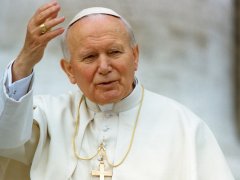 Wadowice. Centinaia di bambini si addensano in file poco ordinate e chiassose. L’attesa è lunga, ma non troppo. L’atmosfera è quella tipica delle gite scolastiche. In ulitsa Koscielna (ossia della Chiesa) numero 7 pellegrini e studenti in erba si mischiano davanti alla casa natale di Karol Wojtyla. Qui, il 18 maggio del 1920, nacque il futuro Papa. Al primo piano dell’edificio una suora, che parla anche in italiano, invita i visitatori a mettere delle pantofole per non sporcare i pavimenti. Le pareti sono piene di foto di Giovanni Paolo II, le bacheche contengono libri e documenti. Non mancano nemmeno i giornali, soprattutto quelli riguardanti l’attentato del 1981.
“Tutto sommato, la Polonia e la sua Chiesa hanno superato bene la morte del Santo Padre”, osserva il noto intellettuale cracoviese, Jan Prokop. Non erano pochi, soprattutto tra i prelati locali, a prevedere scenari inquietanti. “La scelta di un successore tedesco – continua il professor Prokop – non ha creato malumori. Con i vicini tedeschi si sono combattute in passato tante guerre. Ma il cardinale Joseph Ratzinger è stato per anni uno dei più stretti collaboratori di Wojtyla e ha ricordato più volte nei suoi discorsi pubblici il Papa polacco”. Bisogna anche aggiungere che il fedele segretario particolare del Pontefice defunto, monsignor Stanislao Dziwisz, è stato nominato da Benedetto XVI arcivescovo di Cracovia. Un vero e proprio segnale di continuità.
Giovanni Paolo II si è congedato dai suoi connazionali con una serie di pubblicazioni, che sono andate letteralmente a ruba. Veri e propri bestsellers che la gente conserva con cura. La “guida morale” per oltre 26 anni ha traghettato il Paese slavo fuori dalle secche del comunismo ed è intervenuto pesantemente nella primavera del 2003, quando la Polonia, come al solito frammentata al suo interno e con una fronda cattolica conservatrice contraria, ha scelto tra l’adesione all’Unione europea ed il nulla.
Cracovia è come sempre splendida. Il castello del Wawel, dove batte il cuore della Polonia, e la piazza del Mercato danno lustro ad una delle capitali della cultura europea. E’ un pullulare di gente proveniente da ogni angolo del mondo. L’organizzazione è più che buona. Il sorriso e il senso dell’ospitalità accompagnano ovunque il visitatore.
Il turismo religioso, legato a Giovanni Paolo II, è discreto. Gadget e foto sono venduti in buon numero, ma senza eccessiva materializzazione. L’Ente del turismo di Cracovia propone il percorso papale, una mezza giornata, a cifre non piccole, ben più care della visita al campo di sterminio di Auschwitz. Per il viaggiatore “fai da te” non sono facili da trovare i pulmini bianchi che percorrono i quaranta chilometri che separano Cracovia da Wadowice. La strada è stretta e pericolosa. Ci vuole quasi un’ora e venti e tanta pazienza per sopportare il caldo appiccicoso.
Nella piazza principale di Wadowice, cittadina abitata da poche migliaia di persone, la chiesa della Madonna di Soccorso esibisce sulla facciata un paio di grandi stendardi vaticani ed un busto raffigurante Giovanni Paolo II ricolmo di fiori. All’interno del tempio alcuni paramenti del Santo Padre sono già reliquia. L’emozione per la morte di Karol Wojtyla è ancora forte. A Wadowice, però, adesso vi è coscienza che nel 1920 è nato un santo.
Giuseppe D’Amato
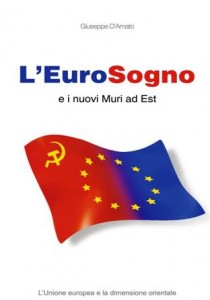
da L’EuroSogno e i nuovi Muri ad Est. Greco&Greco editori, Milano 2008. PP. 353-354.
* * *
Come ha dichiarato il parroco della Basilica di Wadowice, Jakub Gil, le tradizionali Serate “papali” saranno anticipate dalle 20.00 alle 18.00. La scelta dell’ora era dettata dalla decisione di terminare la celebrazione all’ora del ritorno del Pontefice nella Casa del Padre, ossia alle 21,37. Dopo la beatificazione negli incontri si porrà minor attenzione all’aspetto della salita al Cielo di Karol Wojtyla quanto all’elevazione agli altari ed alla gioia della benedizione.
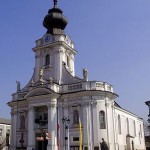
- Basilica della Beata Vergine Maria
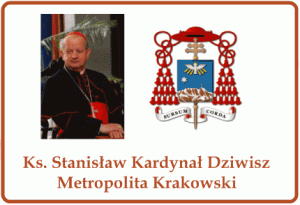 “Na pełną konsekwencję wiary Jana Pawła II, jego skoncentrowanie się na Bogu i sprawach człowieka oraz wierność w przyjaźni wskazał w swej improwizowanej wypowiedzi podczas czuwania modlitewnego w Circo Massimo wieloletni sekretarz osobisty Jana Pawła II, kard. Stanisław Dziwisz.
Kard. Dziwisz powiedział o swoim pierwszym spotkaniu z ks. Karolem Wojtyłą jako młodym profesorem Wyższego Seminarium Duchownego w Krakowie. Podkreślił jego doskonałe przygotowanie merytoryczne i ciekawe wykłady. Uderzające było to, że często udawał się do kaplicy, długo się modlił, i kiedy wracał po przerwie na wykład odnosiło się wrażenie, że kogoś spotkał, że rozmawiał z Bogiem. „Na nas młodych klerykach sprawiało to ogromne wrażenie” – wyznał metropolita krakowski, dodając, że takie było całe jego życie, a ta jego duchowość pogłębiła się jeszcze, kiedy został papieżem. Rozwijała się w nim nieustannie miłość do Boga i do człowieka, zwłaszcza do młodych.
Prowadząca spotkanie dziennikarka zapytała kard. Dziwisza o to, czy widział kiedyś Jana Pawła II zdenerwowanego. Odpowiadając – wyznał, że owszem, ale nigdy na jakiegoś konkretnego człowieka, gdyż “Ojciec Święty zawsze szanował człowieka”. Ale w Agrygencie, w 1993 roku zdecydowanie potępił mafię. „Tak krzyknął, aż się wszyscy przestraszyliśmy” – wyznał kard. Dziwisz. Drugim razem – papież podniósł głos przed modlitwą „Anioł Pański”, kiedy w roku 2003, na krótko przed wojną w Iraku apelował o podjęcie negocjacji….
Nie zabrakło pytania o relacje Jana Pawła II z socjalistycznym prezydentem Włoch, Sandro Pertinim, który po zamachu 13 maja 1981 odwiedził Ojca Świętego w klinice Gemelli. Kard. Dziwisz wyznał, że już podczas pierwszego spotkania z prezydentem Włoch zawiązała się więź przyjaźni, a Karol Wojtyła był wiernym przyjacielem, dlatego nawet wówczas, gdy mówiono że, nie można Pertiniego odwiedzić w szpitalu papież uważał, że musi to uczynić. Pertini w rozmowie z kard. Dziwiszem zawsze przyznawał się do swego chrześcijaństwa….”.
franciszkanska3.pl – KAI
Poland-Libya. Tusk criticizes Europe for its “hypocrisy” and low protection of civilians.
12 Apr 2011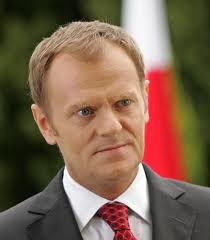 Poland highlights the European “hypocrisy” in Northern Africa. This is one of the main reasons behind Warsaw’s decision not to participate in NATO’s military operations in Libya, Polish Prime Minister Donald Tusk told Gazeta Wyborcza. According to him, Europe risks creating the impression it only intervene when oil supplies are at stake.
“Although there exists a need to defend civilians from a regime’s brutality, isn’t the Libyan case yet another example of European hypocrisy in view of the way Europe has behaved towards Gaddafi in recent years or even months?” said Mr. Tusk. He also added: “If we want to defend people against dictators and repression, torture or imprisonment, then this rule must be universal.”
In future Poland, a usually staunch NATO ally that sent soldiers to Iraq and still has 2,600 troops in Afghanistan, “will take decisions on military involvement elsewhere only when” there’s “a 100 percent conviction that it is absolutely necessary,” explained Mr. Tusk.
Warsaw that assumes the European Union’s rotating six-month presidency in July is also a close ally to the United States. President Obama decided to withdraw its military after the first days of the intervention. Poland has no national interests in Libya and faces parliamentary elections in autumn. The current war has shown that the EU does not have a common foreign policy that it is still in the hands of the states. French president Sarkozy and British Prime minister Cameron’s initiative in Africa has provoked divisions in the 27-nation bloc.
Poland is the biggest beneficiary of the regional EU aids. Talks on the EU’s next multi-year budget are set to begin later this year under the Polish presidency. At that time it would be important not to forget other types of “hypocrisy”.
Welcome
We are a group of long experienced European journalists and intellectuals interested in international politics and culture. We would like to exchange our opinion on new Europe and Russia.
Categories
- Breaking News (11)
- CIS (129)
- Climate (2)
- Energy&Economy (115)
- EU Eastern Dimension (85)
- Euro 2012 – Sochi 2014 – World Cup 2018, Sport (43)
- Euro-Integration (135)
- History Culture (198)
- International Policy (261)
- Military (74)
- Interviews (18)
- Italy – Italia – Suisse (47)
- Odd Enough (10)
- Poland and Baltic States (126)
- Religion (31)
- Russia (421)
- Survey (4)
- Turning points (4)
- Ukraine (176)
- Российские страницы (113)
Archives
- November 2020
- October 2020
- September 2020
- August 2020
- July 2020
- May 2020
- April 2020
- March 2020
- January 2020
- December 2019
- November 2019
- October 2019
- September 2019
- August 2019
- July 2019
- June 2019
- May 2019
- April 2019
- March 2019
- February 2019
- December 2018
- November 2018
- October 2018
- September 2018
- August 2018
- July 2018
- June 2018
- May 2018
- April 2018
- March 2018
- February 2018
- January 2018
- December 2017
- November 2017
- October 2017
- September 2017
- August 2017
- July 2017
- May 2017
- March 2017
- January 2017
- December 2016
- November 2016
- October 2016
- September 2016
- July 2016
- June 2016
- May 2016
- April 2016
- February 2016
- January 2016
- November 2015
- October 2015
- September 2015
- June 2015
- April 2015
- March 2015
- February 2015
- January 2015
- December 2014
- November 2014
- October 2014
- September 2014
- August 2014
- July 2014
- June 2014
- May 2014
- April 2014
- March 2014
- February 2014
- January 2014
- December 2013
- November 2013
- October 2013
- September 2013
- August 2013
- July 2013
- June 2013
- May 2013
- April 2013
- March 2013
- February 2013
- January 2013
- December 2012
- November 2012
- October 2012
- September 2012
- August 2012
- July 2012
- June 2012
- May 2012
- April 2012
- March 2012
- February 2012
- January 2012
- December 2011
- November 2011
- October 2011
- September 2011
- August 2011
- July 2011
- June 2011
- May 2011
- April 2011
- March 2011
- February 2011
- January 2011
- December 2010
- November 2010
- October 2010
- September 2010
- August 2010
- July 2010
- June 2010
- May 2010
- April 2010
- March 2010
- February 2010
- January 2010
- December 2009
- November 2009
- October 2009
- September 2009
- August 2009
Our books