All English posts
Russia and Ukraine have signed a five-year, $7
billion deal on the transit of Russian natural gas to west. About 40 percent of the 200 billion cubic meters (bcm)
of gas that Russia has sent
to Europe annually has been transmitted via Ukraine’s vast network of
pipelines.
Under the new contract, Kyiv next year
is expecting to ship a minimum of 65 bcm,
or about 22 bcm less than it did in 2018.
Minimum volumes will decrease
further to 40 bcm in 2021-24.
The new deal has a “pump or pay” clause, meaning Russia must pay the minimum gas-transit fee even
if it doesn’t pump the contracted volumes through Ukraine.
The new deal stipulates that
“both sides reserve the right to
extend the contract for another 10 years” after its expiration.
Also part of the new contract is Russia
agreeing to pay $2.9 billion to Ukraine
as part of a Stockholm arbitration court ruling, which Moscow did on December 27.
In turn, Naftogaz has promised to
release seized assets belonging to Gazprom
in Europe and both parties have agreed to drop
reciprocal court claims that haven’t concluded and sign an out-of-court
settlement.
Source: rfe/rl.
EU, The European Green Deal.
11 Dec 2019The European Commission today presented The European Green Deal – a roadmap for making the EU’s economy sustainable by turning climate and environmental challenges into opportunities across all policy areas and making the transition just and inclusive for all. President Ursula von der Leyen said: ‘The European Green Deal is our new growth strategy – for a growth that gives back more than it takes away. It shows how to transform our way of living and working, of producing and consuming so that we live healthier and make our businesses innovative. We can all be involved in the transition and we can all benefit from the opportunities. We will help our economy to be a global leader by moving first and moving fast. We are determined to succeed for the sake of this planet and life on it – for Europe’s natural heritage, for biodiversity, for our forests and our seas. By showing the rest of the world how to be sustainable and competitive, we can convince other countries to move with us.‘
President Vladimir Putin and Chinese premier Xi Jinping officially opened the 3,000 kilometer gas pipeline today via videoconference. Russian state gas giant Gazprom will immediately start sending its gas southwards — the first time Russian gas has been sent directly to China. The two countries struck a $400 billion 30-year agreement for Russian gas exports back in 2014. The pipeline will not become fully operational until 2025, when it will be able to carry 38 billion cubic meters of gas a year.
The Russian government has drastically watered-down its new package of climate change legislation after push-back from the country’s leading businesses, the Kommersant reported. “The idea of putting a price on carbon dioxide in Russia has fallen victim to the industrial lobby,” according to the analysts at VTB Capital.
“The model on which the Russian economy has been based for the past 20 years is dying. Everybody needs to find a way to move money into low-carbon areas of the economy. Under the leadership of Rosneft and Gazprom, this cannot be done,” said Mikhail Yulkin, Director of the Center for Environmental Investment.
Russia ratified the Paris Climate Agreement (2015 ) on September 23rd, committing itself to reducing carbon dioxide emissions to 70% of the1990 level. It is the world’s fourth-largest polluter.
Russia emitted 1,734 million tonnes of carbon dioxide in 2005. However, the Kremlin has set 1990 as its benchmark, when Russia emitted 2,397 million tonnes – a figure 38% higher than the Paris recommendations and significantly more than what Russia is emitting today. A 30% reduction from the 1990 level would allow Russia to produce 1,678 million tonnes of carbon dioxide a year — only 5% less than the 1,765 million tonnes produced in 2017.
Poland’s ruling conservatives secured a second term in power. The victory by the Law and Justice (PiS) party followed a campaign focused on a raft of new welfare measures coupled with attacks on Western values.
Terming the victory a “huge success,” PiS leader Jaroslaw Kaczynski said his party had “obtained a mandate to continue our good change … to continue to change Poland.”
Since it took office in 2015, the PiS has in many ways upended Polish politics by limiting liberal democracy through a string of controversial court reforms that have stoked tension with the EU, as well as through its monopolization of public media, among other measures.
The PiS scored 43.59 percent of the popular vote, for 235 seats. Up to now it controlled 239 of the 460 seats in the lower house of parliament.
The opposition Civic Coalition (KO) scored 27.40 percent support for 134 seats. It draws support mainly from urban voters upset by the PiS’s divisive politics, controversial judicial reforms and graft scandals.
The PiS lost control of the Senate, or upper house, taking 48 of the 100 seats, something analysts said would provide a check on the party’s legislative drives. Turnout tallied at 61.74 percent, the highest since Poland shed communism in 1989.
Volodymyr Zelensky’s Inaugural Address.
20 May 2019Dear Ukrainians!
After my election victory, my six-year-old son said: «Dad, they say on TV that Zelensky is the President … So, it means that…I am… the President too?!» At the time, it sounded funny, but later I realized that it was true. Because each of us is the President. Not just the 73 percent who voted for me, but all 100 percent of Ukrainians. This is not just mine, this is our common victory. And this is our common chance that we are responsible for together.
It hasn’t been only me who has just taken the oath. Each of us has just put his hand on the Constitution and swore allegiance to Ukraine. 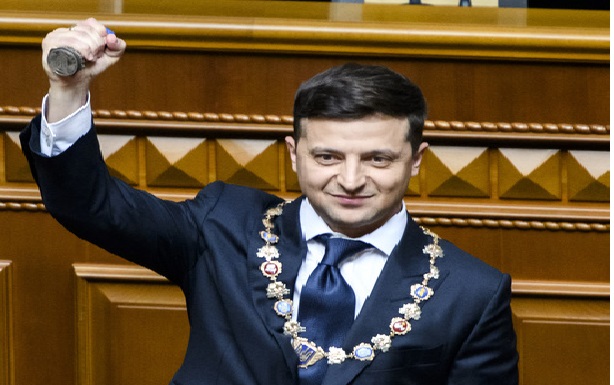
Now, imagine the headlines: «The President Does Not Pay Taxes,» «The Intoxicated President Ran the Red Light» or « The President Is Quietly Stealing Because Everyone Does.» Would you agree that it’s shameful? This is what I mean when I say that each of us is the President. From now on, each of us is responsible for the country that we leave to our children. Each of us, in his place, can do everything for the prosperity of Ukraine.
Our European country begins with each one of us. We have chosen a path to Europe, but Europe is not somewhere out there. Europe is here (in the head — Ed.) And after it appears here, it will be everywhere, all over Ukraine.
This is our common dream. But we also share a common pain. Each of us has died in the Donbas. Every day we lose each one of us. And each of us is a refugee — the one who has lost his own home and the one who has opened the door of his home, sharing the pain. And each of us is a migrant worker — the one who could’t find himself at home, but has found income in a foreign country, and the one who struggling with poverty, is forced to lose his own dignity.
But we will overcome all of this! Because each of us is a Ukrainian.
We are all Ukrainians: there are no bigger or lesser, or correct or incorrect Ukrainians. From Uzhgorod to Luhansk, from Chernigiv to Simferopol, in Lviv, Kharkiv, Donetsk, Dnipro and Odesa — we are Ukrainians. And we have to be one. After all, only then we are strong.
Today I appeal to all Ukrainians in the world. There are 65 millions of us. Yes, don’t be surprised: there are 65 million of us — those born on the Ukrainian soil. Ukrainians in Europe and Asia, in North and South America, Australia and Africa — I appeal to all Ukrainians on the planet!
We really need you. To all who are ready to build a new, strong and successful Ukraine, I will gladly grant Ukrainian citizenship. You must come to Ukraine not to visit, but to return home. We are waiting for you. There is no need to bring souvenirs from abroad, but please, bring your knowledge, experience and values.
That will help us start a new era. Skeptics will say that it is impossible, a fantasy. But what if this is, in fact, our national idea — to unite and make the impossible against all odds? 
Remember the Iceland soccer team at the European Championship — when a dentist, a director, a pilot, a student and a cleaner defended their country’s honor? No one believed they could do it, but the did it!
And this should be precisely our path. We must become the Icelanders in soccer, the Israelis — in the defense of their native land, the Japanese — in technology and the Swiss — in the ability to live with each other in harmony, despite all the differences.
However, our first task is ceasefire in the Donbas. I have been often asked: What price are you ready to pay for the ceasefire? It’s a strange question. What price are you ready to pay for the lives of you loved ones? I can assure you that I’m ready to pay any price to stop the deaths of our heroes. I’m definitely not afraid to make difficult decisions and I’m ready to lose my fame, my ratings, and if need be — without any hesitation, my position to bring peace, as long as we do not give up our territories.
History is unfair. We are not the ones who have started this war. But we are the ones who have to finish it. And we are ready for dialogue. I believe that the perfect first step in this dialogue will be the return of all Ukrainian prisoners.
Our next challenge is returning the lost territories. In all honesty, this wording does not seem entirely correct to me because it is impossible to return what has always been ours. Both Crimea and Donbas have been our Ukrainian land, but the land where we have lost the most important thing — the people.
Today we have to return their minds — that’s what we have lost. Over the years, the authorities have not done anything to make them feel Ukrainians and understand that they are not strangers, but they are our people, they are Ukrainians. And even if they are granted 10 different passports, it won’t change anything. For being Ukrainian is not a line in the passport — being Ukrainian is here (in the heart — Ed.)
I know that for sure. I know that from the soldiers who are now defending Ukraine, our heroes, some of whom are Ukrainian-speakers, while others — Russian-speakers. There, in the frontline, there is no strife and discord, there is only courage and honor. So, I want to appeal to our defenders now:
There can be no strong army in a place where the authorities do not respect the people who every day sacrifice their life for the country. I will do everything I can to make you feel respect. This means decent, and most importantly, secure salaries, living conditions, vocation leaves after the combat missions and your and your families’ holidays. We must not just talk about NATO standards — we must create those standards.
Of course, besides the war, there are many other problems that trouble Ukrainians. Among them are the shocking utility tariffs, humiliating wages and pensions, painful prices and non-existent jobs. There is also the health care that is seen as improving mostly by those who have never been to a regular hospital with their child. And then, there are also the mythical Ukrainian roads that are being built and repaired only in someone’s prolific imagination.
Allow me to quote one American actor who has become a great American president: «The government does not solve our problems. The government is our problem.» 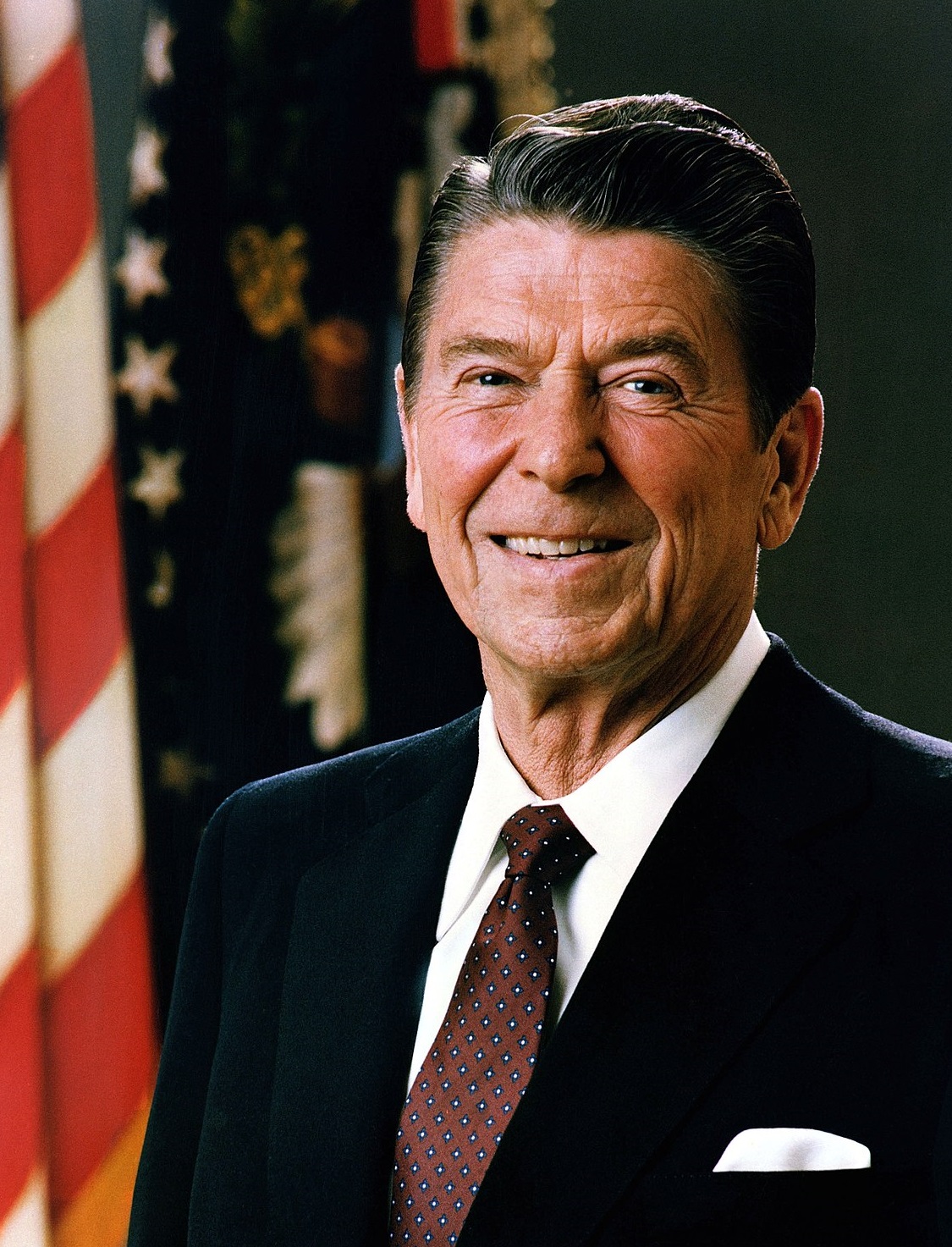
I do not understand our government that only shrugs and says: «There is nothing we can do.» Not true. You can. You can take a sheet of paper and a pen and free your seats for those who think about the next generations and not about the next election! Do it and people will appreciate that.
Your applause is pretty light…I guess not everyone likes what I’m saying? Too bad, since it’s not me, but the Ukrainian people who is saying that.
My election proves that our citizens are tired of the experienced, pompous system politicians who over the 28 years, have created a country of opportunities — the opportunities to bribe, steal and pluck the resources.
We will build the country of other opportunities — the one where all are equal before the law and where all the rules are honest and transparent, the same for everyone. And for that, we need people in power who will serve the people. This is why I really do not want my pictures in your offices, for the President is not an icon, an idol or a portrait. Hang your kids’ photos instead, and look at them each time you are making a decision.
I can go on, but Ukrainians wants actions, not words. So, dear deputies! You have appointed the inauguration on Monday, a work day, which has one benefit -— it means you are ready to work.
Therefore, I ask that you approve:
- The law on removing parliamentary immunity.
2. The law establishing criminal liability for illegal enrichment.
3. The long-awaited Electoral Code and open-lists.
Also, please dismiss:
- Head of the Security Service of Ukraine.
- Prosecutor General of Ukraine.
3. Minister of Defense of Ukraine.
This is certainly not all that you could do, but for now, it will suffice.
You will have two months to do that. Do it. And take all the medals for it — not a bad move before the snap parliamentary election. I am dissolving the Verkhovna Rada of the eighth convocation
Glory to Ukraine!
And finally:
Dear Nation!
All my life I tried to do all I could so that Ukrainians laughed. That was my mission. Now I will do all I can so that Ukrainians at least do not cry any more.
Volodymyr Zelensky, new Ukrainian president.
21 Apr 2019 Mr Zelensky has taken more than 73% with incumbent Petro Poroshenko trailing far behind on 24%, the Electoral Commission reported. 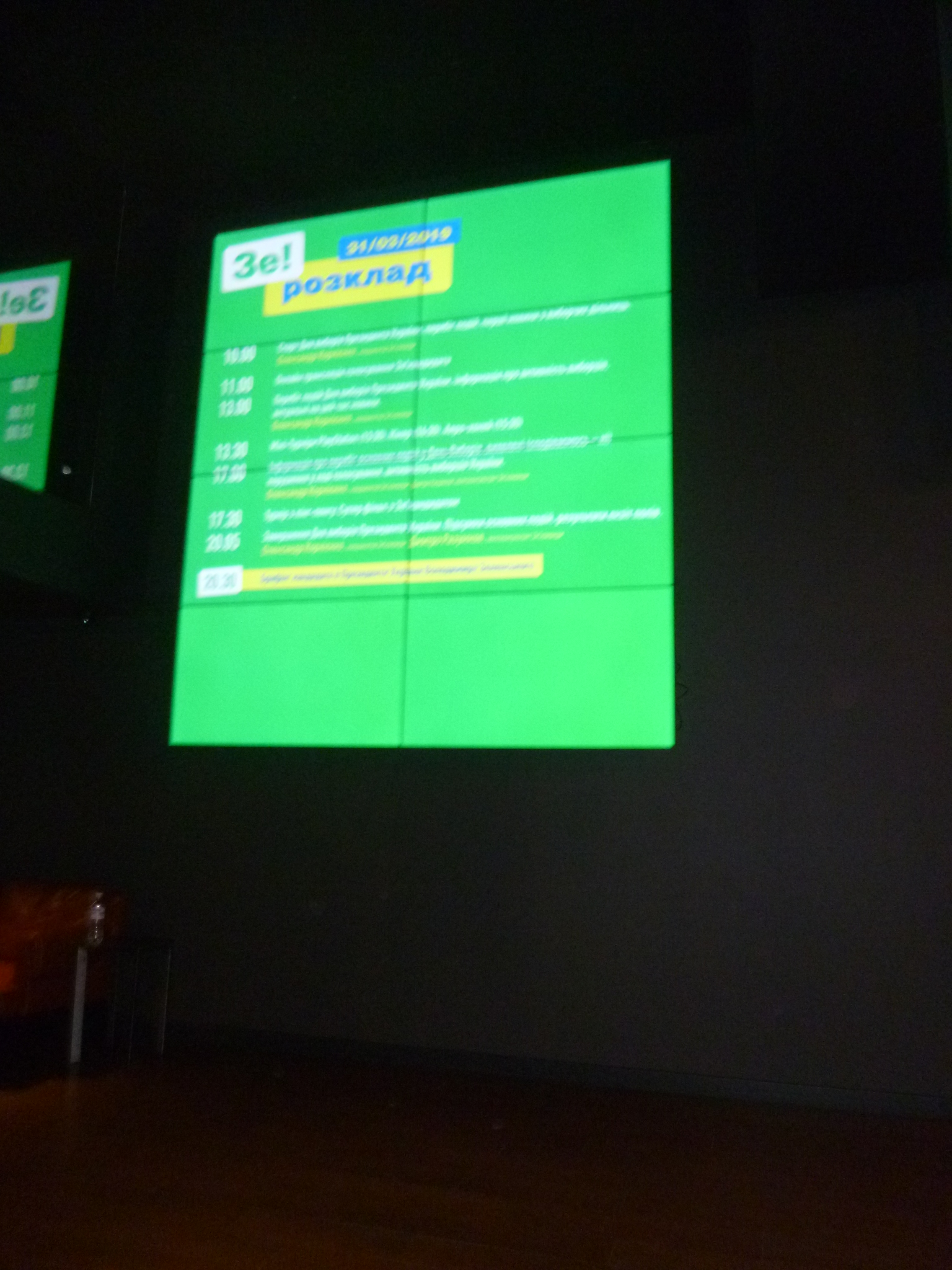
“I will never let you down,” the new president told celebrating supporters.
Mr Poroshenko, who admitted defeat after the first exit polls were published, has said he will not be leaving politics. He told voters that Mr Zelensky, 41, was too inexperienced to stand up to Russia effectively.
Mr Zelensky, a political novice, is best known for starring in a satirical television series Servant of the People, in which his character accidentally becomes Ukrainian president. He plays a teacher who is elected after his expletive-laden rant about corruption goes viral on social media.
He ran under a political party with the same name as his show. With no previous political experience, Mr Zelensky’s campaign focused on his difference to the other candidates rather than on any concrete policy ideas.
Experts say his supporters, frustrated with establishment politicians and cronyism, have been energised by his charisma and anti-corruption message.
SHORT BIOGRAPHY
Volodymyr Zelensky was born in 1978 in Kryvyi Rih (Dnipropetrovsk region) into a family of the Russian-speaking Jewish intelligentsia, the only son of Oleksandr and Rimma. His father is a trained mathematician in cybernetics (his doctorate comes from the Moscow State Mining University), and head of the Department of Computer Science and Applied Programming in the Kryvyi Rih Economic Institute (a branch of the Vadym Hetman National Economic University in Kyiv). His mother is an engineer by training, now retired. 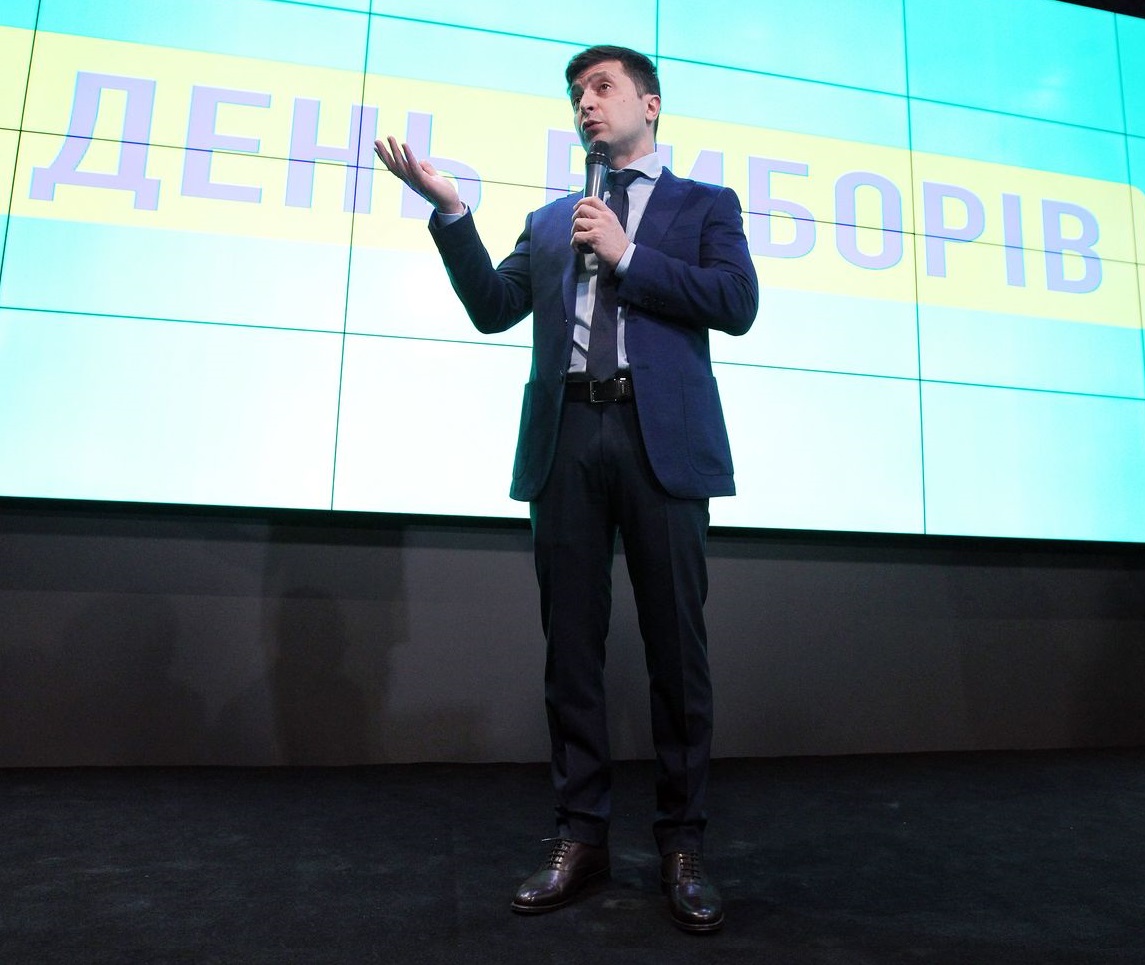
Zelenskiy studied Law at the Kryvyi Rih Economics Institute, but never entered the profession. According to available information he has never served in the army. He married Olena Kiyashko (b. 1978), a friend from high school who graduated in architecture from the Kryvyi Rih Economics Institute. They have two children, Oleksandr (b. 2004) and Kyryl (b. 2013). His wife is his artistic collaborator, a co-owner of part of his property, and a screenwriter for television and cabaret.
In 1997, he and his friends founded their own cabaret Kvartal-95, in which he still performs today. Two years later the group was invited to perform on KVN’s Premier League, a very popular cabaret programme on Russian television, and began performing in many post-Soviet countries. During this time Zelenskiy lived in Russia for six years. After 2006 he expanded his business in the entertainment industry, and together with his friends from college Boris and Serhiy Shefir, they founded the Studio Kvartal-95 company. In 2013, the Ukrainian edition of Forbes put him top of the 25 richest celebrities and sports stars in Ukraine, and in 2010 the weekly Focus placed him fifth on the list of the most bankable showbusiness stars, He officially announced he was running for presidency on 31 December 2018.
Different Sources
Ukrainian presidential election, first round.
31 Mar 2019Ukraine’s Central Election Commission (CEC) has announced the final voter turnout figure on the March 31 Election Day, saying 63.48% of voters went to the polls. As many as 17,000,599 voters of the 26,770,419 citizens eligible to vote took part in the March 31 voting, CEC head Tetiana Slipachuk said. 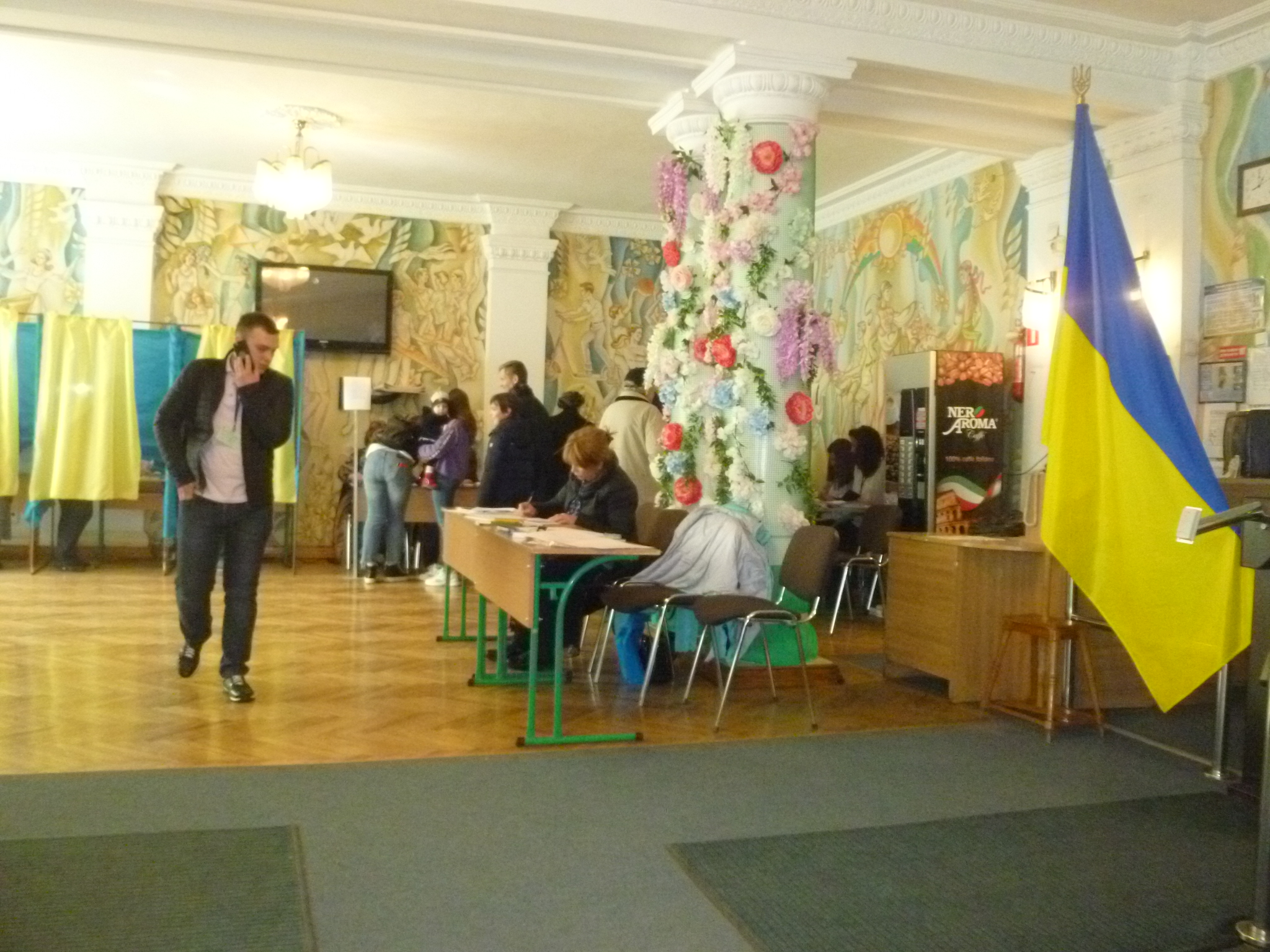
This figure is higher than at the 2014 presidential elections when 60.29% went to the polls. The highest voter turnout figures were recorded in Lviv region (68.88%), Volyn region (68.33%) and the city of Kyiv (67.99%). The lowest turnout was registered in Zakarpattia (46.99%), followed by Chernivtsi (56.07%) and Ukrainian-controlled districts in Luhansk region (56.77%).
National Exit Poll 2019 on March 31 show that 30.6% of Ukrainians voted for presidential candidate Volodymyr Zelensky and 15.95% supported incumbent President Petro Poroshenko in the first round of the presidential election on March 31. Batkivshchyna Party leader Yulia Tymoshenko had 14.2% of the vote.
Source: Unian
INF nuclear treaty suspended.
2 Feb 2019 Russia has suspended the Cold War-era Intermediate-range Nuclear Forces Treaty (INF) after a similar move by the United States. President Vladimir Putin said Russia will start work on creating new missiles, including hypersonic ones, and told ministers not to initiate disarmament talks with Washington. 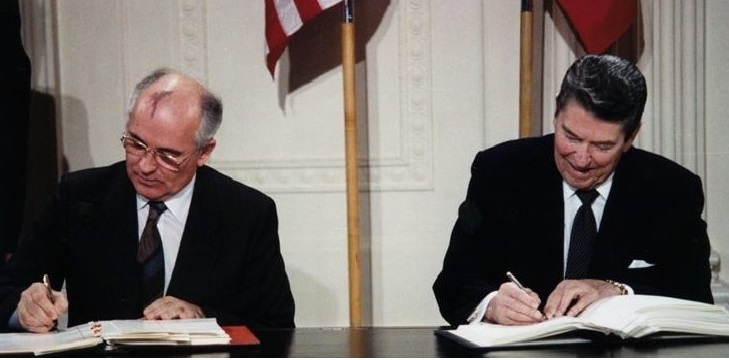
Foreign Minister Sergei Lavrov accused the United States of violating the INF and other arms deals, such as the non-proliferation treaty.
The Americans say they have evidence that a new Russian missile falls within the 500-5,500 km range banned by the treaty. Some US officials have said that a number of 9M729 missiles – known to Nato as SSC-8 – have already been deployed.
President Putin said Moscow would not get dragged into an expensive arms race, and would not deploy short- and medium-range missiles unless US weapons were deployed there first.
Such an arms race would be a major concern for European countries.
The price tag to recapitalize and sustain aging U.S. missiles, subs and bombers is already well in excess of $1 trillion over the next three decades.
Signed in 1987 by the US and USSR, it banned the use of short and medium-range missiles except sea-launched weapons by both countries. China and other countries are outside the INF treaty.
Last January the Chinese Global Times newspaper wrote that the Army had carried out an exercise with an intermediate-range ‘ship killer’ missile called DF-26. According to the Pentagon Beijing has 16 to 30 intermediate-range ballistic missiles, capable of controlling the South China Sea and of targeting US large ships and US naval bases in the western Pacific region.
Clash in the Kerch Strait.
27 Nov 2018The three ships were sailing off the coast of Crimea, which was annexed by Russia in 2014, when they were seized. Russians opened fire, before its special forces stormed the vessels. Some Ukrainians were injured.
Moscow accused the Ukrainian ships of illegally entering its waters, after the FSB had temporarily closed an area of water for shipping. Kiev called it a flagrant violation of international law, because the Black Sea is free for shipping, and annexed Crimea belongs to Ukraine.
Ukraine also cited a 2003 Russia-Ukraine treaty on unimpeded access to the Kerch Strait and Sea of Azov. It said it had informed the Russians in advance of its plan to move its ships through the sea to Mariupol – a claim denied by Russia.
In recent weeks, two Ukrainian vessels passed through the Kerch Strait without incident.
Welcome
We are a group of long experienced European journalists and intellectuals interested in international politics and culture. We would like to exchange our opinion on new Europe and Russia.
Categories
- Breaking News (11)
- CIS (129)
- Climate (2)
- Energy&Economy (115)
- EU Eastern Dimension (85)
- Euro 2012 – Sochi 2014 – World Cup 2018, Sport (43)
- Euro-Integration (135)
- History Culture (198)
- International Policy (261)
- Military (74)
- Interviews (18)
- Italy – Italia – Suisse (47)
- Odd Enough (10)
- Poland and Baltic States (126)
- Religion (31)
- Russia (421)
- Survey (4)
- Turning points (4)
- Ukraine (176)
- Российские страницы (113)
Archives
- November 2020
- October 2020
- September 2020
- August 2020
- July 2020
- May 2020
- April 2020
- March 2020
- January 2020
- December 2019
- November 2019
- October 2019
- September 2019
- August 2019
- July 2019
- June 2019
- May 2019
- April 2019
- March 2019
- February 2019
- December 2018
- November 2018
- October 2018
- September 2018
- August 2018
- July 2018
- June 2018
- May 2018
- April 2018
- March 2018
- February 2018
- January 2018
- December 2017
- November 2017
- October 2017
- September 2017
- August 2017
- July 2017
- May 2017
- March 2017
- January 2017
- December 2016
- November 2016
- October 2016
- September 2016
- July 2016
- June 2016
- May 2016
- April 2016
- February 2016
- January 2016
- November 2015
- October 2015
- September 2015
- June 2015
- April 2015
- March 2015
- February 2015
- January 2015
- December 2014
- November 2014
- October 2014
- September 2014
- August 2014
- July 2014
- June 2014
- May 2014
- April 2014
- March 2014
- February 2014
- January 2014
- December 2013
- November 2013
- October 2013
- September 2013
- August 2013
- July 2013
- June 2013
- May 2013
- April 2013
- March 2013
- February 2013
- January 2013
- December 2012
- November 2012
- October 2012
- September 2012
- August 2012
- July 2012
- June 2012
- May 2012
- April 2012
- March 2012
- February 2012
- January 2012
- December 2011
- November 2011
- October 2011
- September 2011
- August 2011
- July 2011
- June 2011
- May 2011
- April 2011
- March 2011
- February 2011
- January 2011
- December 2010
- November 2010
- October 2010
- September 2010
- August 2010
- July 2010
- June 2010
- May 2010
- April 2010
- March 2010
- February 2010
- January 2010
- December 2009
- November 2009
- October 2009
- September 2009
- August 2009
Our books