All English posts
Putin’s 4th term.
7 May 2018Vladimir V. Putin took the oath of office for a fourth term as Russia’s president, in a ceremony staged in a gilded Kremlin hall once used to crown czars.
Mr Putin has ruled Russia as prime minister or president for more than 18 years. Mr Putin won re-election in March with nearly 77 percent of the vote, the largest margin for any post-Soviet leader.
European election observers with the Organization for Security and Cooperation in Europe wrote that his recent re-election, “took place in an overly controlled legal and political environment marked by continued pressure on critical voices.” 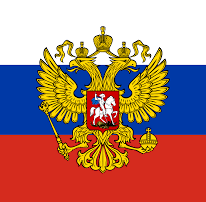
“We have revived pride in our fatherland,” Mr Putin said. “As head of state I will do all I can to multiply the strength and prosperity of Russia.”
“We need breakthroughs in all areas of life. I’m deeply convinced that such a leap forward can only be secured with a free society that accepts all that is new and advanced.”
He said that in the past Russia had risen again from setbacks, “like a phoenix“
Mr. Putin signed decrees outlining his goals, such as reducing poverty and, by the end of his six-year term, raising Russian life expectancy to 78 years, from 72 now.
First elected president in 2000, Mr Putin renewed his four-year term in 2004 before stepping aside in 2008 to serve as prime minister under his protege, Dmitry Medvedev, because by law he could serve only two consecutive terms.
Few doubted who was really in charge and in 2012 Mr Putin returned as president, this time for a term of six years.
When he reaches the end of his fourth term in 2024, he will have been in power for nearly a quarter of a century.
That would still fall short of Soviet dictator Joseph Stalin‘s 31 years in power or, indeed, the reigns of some Russian tsars such as Alexander II (26 years) and Nicholas I (30 years).
President Vladimir Putin used his annual state of the nation speech to threaten Western nations with a battery of new weapons including an intercontinental nuclear cruise missile and to assure Russians that their lives would improve through enormous new social spending.
Gleb Pavlovsky, a political analyst and former Kremlin consultant, wrote on Facebook that, “From tales about progress, the speech flowed into an open-ended declaration of world war.”
“We would consider any use of nuclear weapons against Russia or its allies to be a nuclear attack on our country,” Mr. Putin said. “The response would be immediate.” 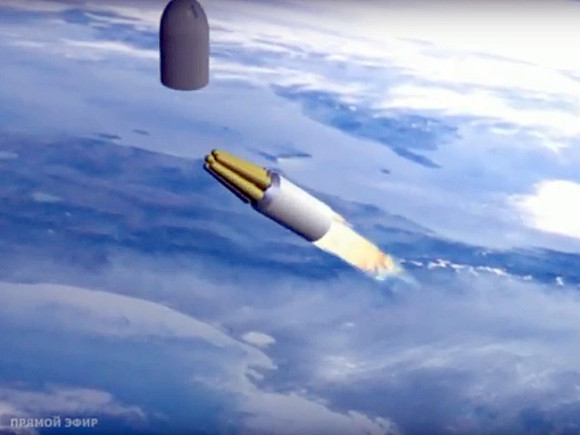
Mr. Putin said that Russia had tested various new nuclear weapons, including a nuclear-powered missile that could reach virtually anywhere in the world and that could not be intercepted by existing antiballistic missile systems. A video illustrating the weapon, which he said was tested at the end of 2017, showed it leaving Russia, slaloming around obstacles in the South Atlantic, before rounding Cape Horn at the tip of South America and heading toward the west coast of the United States.
“We’re not threatening anyone,” Putin said. “Russia’s growing military might is a reliable guarantee of peace on our planet because it ensures the strategic balance in the world.”
“Giving half the time in the annual address to the Russian parliament to a graphic description of new weapons’ capabilities is a measure of how close the U.S. and Russia have moved toward military collision,” Dmitri Trenin, head of the Carnegie Moscow Center, wrote on Twitter. “For the foreseeable future, it looks that the U.S.-Russia agenda will be limited to just one item: war prevention. Good luck to us all.”
See also The Moscow Times, YouTube, DW.
Polish anti-defamation bill.
6 Feb 2018The bill that has angered Israel by imposing a jail term for anyone who accuses Poland of being complicit in the Holocaust.
The US State Department has urged Poland “to reevaluate the legislation in light of its potential impact on the principle of free speech.”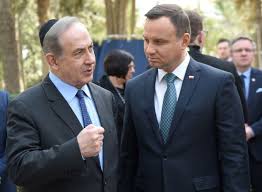
Reacting to President Duda’s move, Israel‘s foreign ministry said it hoped that “changes and corrections” would be made to the Polish anti-defamation law.
In Poland, the new rules are seen as a way of fighting the use of the phrase “Polish death camps”, which many say implies the country’s involvement in the Holocaust.
Poland has long fought the use of such phrases, which have often appeared in foreign media in relation to Nazi German-run extermination camps located in occupied Polish territory during World War II. Poland’s ruling conservatives have said such phrases distort history.
Czech ‘Berlusconi’ wins the elections.
23 Oct 2017One of central Europe’s richest men will begin the tricky task of building a ruling coalition after convincing Czech voters in weekend elections that he can stem immigration, fight corruption and banish the establishment from power.
Andrej Babiš, a tycoon turned populist politician who has been compared to Donald Trump and Silvio Berlusconi, confirmed that the Czech president would ask him next week to begin forming the next government. 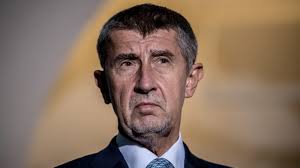
Babiš led his new party ANO – “ano” is Czech for “yes” – to a resounding poll victory, winning almost 30% of the vote.
The election ended a quarter of a century of political dominance by the traditional parties of the Czech mainstream, with the Social and Christian Democrats scoring just 7% and 6% respectively.
Voters largely turned their backs on liberal pro-European parties, with the centre-right Civic Democrats winning 11% of the vote, the direct democracy advocates of the Pirate party 10.6% and the far-right, anti–EU SPD 10.8%.
ANO will control 78 seats in the 200-member lower house.
Mr Babis’s current partners, the leftist Social Democrats of Prime Minister Bohuslav Sobotka and the centrist Christian Democrats, have rejected a government with ANO unless it pledges Mr Babis will not be part of it.
Babiš said he did not want a government that would include Communists and the anti-EU, anti-immigration SPD party, which made surprisingly a strong showing in the election.
Battle of Grunwald brought to life.
15 Jul 2017Some 3,000 actors have brought to life the 1410 Battle of Grunwald on its 607th anniversary to a crowd of 60,000, making it one of Europe’s largest medieval re-enactments.
King of Poland Wladyslaw Jagiello commanded an allied Polish-Lithuanian army to defeat the Teutonic Order, previously considered invincible.
It is considered to be one of the most glorious and significant military victories in Polish history.
Today, President Obama authorized a number of actions in response to the Russian government’s aggressive harassment of U.S. officials and cyber operations aimed at the U.S. election in 2016. Russia’s cyber activities were intended to influence the election, erode faith in U.S. democratic institutions, sow doubt about the integrity of our electoral process, and undermine confidence in the institutions of the U.S. government. These actions are unacceptable and will not be tolerated.
Sanctioning Malicious Russian Cyber Activity; Responding to Russian Harassment of U.S. Personnel; Raising Awareness About Russian Malicious Cyber Activity.
Complete Document – The White House.
“The Warsaw summit is of breakthrough significance. Our message to NATO from the very beginning was clear: in the face of the changing situation in the security environment in our part of the world, in Central and Eastern Europe it is necessary to strengthen the presence and potential of NATO,” President Andrzej Duda has said an interview ahead of a Warsaw summit of the military alliance. “We have said from the outset that there is a need to strengthen the Baltic states and strengthen Poland in these terms through the presence of NATO forces in nations in Central and Eastern Europe.” 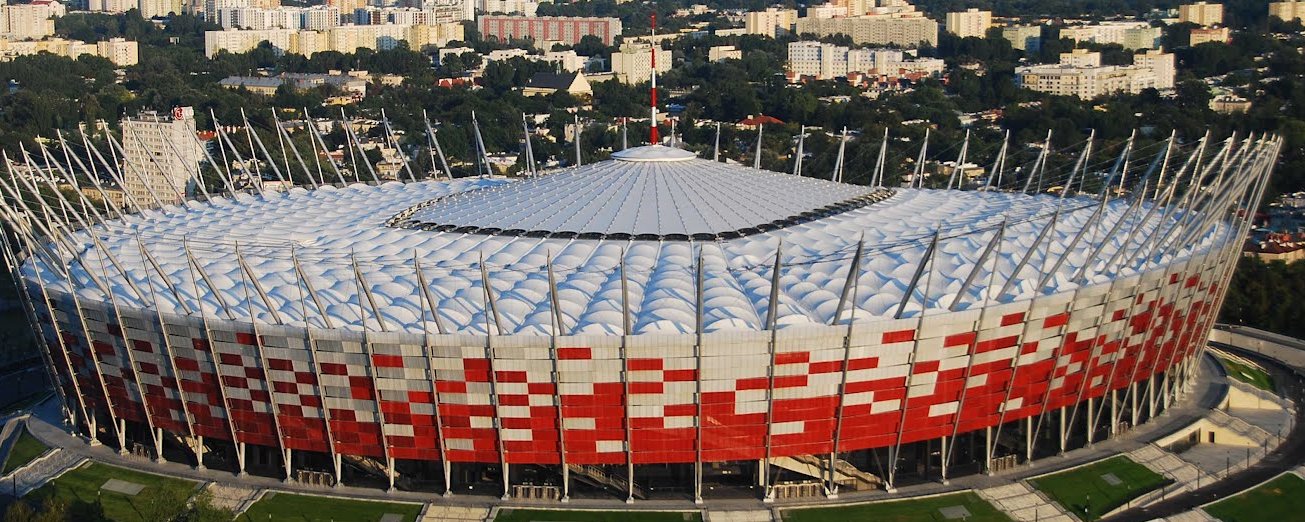
Asked if four battalions of a thousand soldiers each in Poland and the Baltic countries would be enough to deter Russia, Duda said: “This is above all a clear signal what the intentions of the Alliance are. “It is above all a clear signal that the Alliance is tightly-knit, that the Alliance is effective, that the Alliance is able to make decisions and, above all, that it is cohesive, it is together, that it shows solidarity, that we are reacting to what is happening…
“One thing is the most important: that anyone who carries out an act of aggression on a country in which there are NATO troops will at the same time be carrying out an act of aggression on all countries.”
“The security situation in Europe has significantly deteriorated,” Mrs Angela Merkel told the German parliament. “Russia’s actions have deeply disturbed our eastern allies. They therefore require clear reassurance from the alliance.” NATO is expected to approve plans to send four combat battalions of around 1,000 troops to each of Poland, Lithuania, Latvia and Estonia at the Warsaw summit. “If international law and the basic principle of the inviolability of borders are put in question by word and deed, then of course trust is lost,” Mrs Merkel said.
Secretary General Jens Stoltenberg said Allied leaders will take key decisions to strengthen the Alliance’s defence and deterrence and project stability beyond NATO’s borders.
Since the Alliance’s last summit in September 2014 in Wales, NATO has implemented the biggest reinforcement of its collective defence since the Cold War. “We delivered a faster, a stronger, and a more ready Alliance”, Mr Stoltenberg told a press conference at NATO headquarters. “We now need to take the next steps. So at our Summit in Warsaw, we will agree to further enhance our military presence in the eastern part of the Alliance.”
The Secretary General said that Allied leaders will agree to deploy four robust, multinational battalions to Estonia, Latvia, Lithuania and Poland. Further efforts to strengthen the Alliance’s deterrence and defence include a tailored presence in the south-east, based on a multinational brigade in Romania and steps to improve cyber-defence, civil preparedness and the ability to defend against ballistic missile attacks.
The US wants other members in the alliance to share the burden of military spending. NATO wants its members to try to spend 2 percent of their GDP on defense. Many members will want to revise this system in Warsaw as it does not reflect the contribution of each country
Mr Stoltenberg said preparations for holding another meeting of the NATO-Russia Council shortly after the Warsaw Summit are ongoing. “We remain open to dialogue with Russia. The NATO-Russia Council has an important role to play as a forum for dialogue and information exchange, to reduce tensions and increase predictability,” Stoltenberg said.
The Pope coming back from Armenia.
27 Jun 2016Pope Francis spoke on the Armenian genocide and Britain’s vote to leave the European Union, as well as a host of other topics in a wide-ranging press conference on his flight back to Rome following his Apostolic Voyage to Armenia.
Sunday’s in-flight press conference began with questions about the Apostolic Voyage to Armenia that Pope Francis had just concluded.
Asked about his message for Armenia for the future, the Holy Father spoke about his hopes and prayers for justice and peace, and his encouragement that leaders are working to that end. In particular, he talked of the work of reconciliation with Turkey and with Azerbaijan. The Pope will be travelling to Azerbaijani later this year. 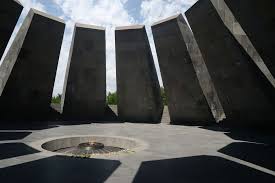
Pope Francis also spoke about his use of the word ‘genocide,’ acknowledging the legal import of the expression, but explaining that this was the term commonly in use in Argentina for the massacre of Armenians during the first World War.
About the Pan-Orthodox Council, which concluded Sunday in Crete, the Pope said, “A step was made forward . . . I think the result was positive.” In response to a question about upcoming commemorations of the 500th anniversary of the Protestant “Reformation,” Pope Francis said, “I think perhaps this is also the right moment for us not only to remember the wounds on both sides, but also to recognize the gifts of the Reformation.” He also had words of praise for Martin Luther. The Pope praying and working together are important for fostering unity.
Reporters also questioned the Pope about recent events, including the recent “Brexit” vote in Britain. He said he had not had time to study the reasons for the British vote to leave the European Union, but noted that the vote showed “divisions,” which could also be seen in other countries. “Fraternity is better, and bridges are better than walls,” he said, but he acknowledged that there are “different ways of unity.” Creativity and fruitfulness are two key words for the European Union as it faces new challenges.
Finally, answering a question from Father Federico Lombardi, SJ, the Director of the Holy See Press Office, Pope Francis reflected on his visit to the Memorial at Tzitzernakaberd, and his upcoming journey to Poland, which will include a visit to Auschwitz. The Pope said that in such places, he likes to reflect silently, “alone,” praying that the Lord might grant him “the grace of crying.”
Extract from the Vatican Radio.
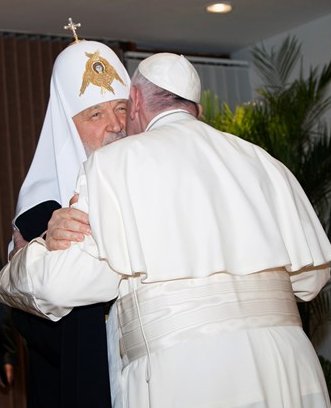
The Pope and The Patriarch together in Cuba
13 Feb 2016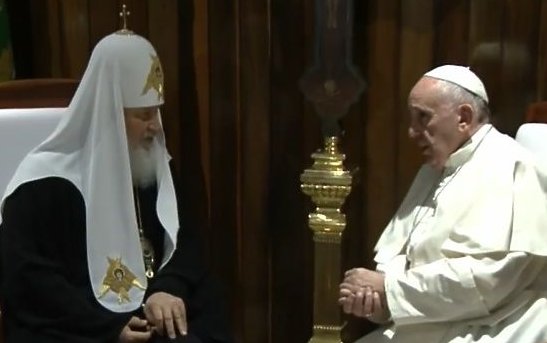
Welcome
We are a group of long experienced European journalists and intellectuals interested in international politics and culture. We would like to exchange our opinion on new Europe and Russia.
Categories
- Breaking News (11)
- CIS (129)
- Climate (2)
- Energy&Economy (115)
- EU Eastern Dimension (85)
- Euro 2012 – Sochi 2014 – World Cup 2018, Sport (43)
- Euro-Integration (135)
- History Culture (198)
- International Policy (261)
- Military (74)
- Interviews (18)
- Italy – Italia – Suisse (47)
- Odd Enough (10)
- Poland and Baltic States (126)
- Religion (31)
- Russia (421)
- Survey (4)
- Turning points (4)
- Ukraine (176)
- Российские страницы (113)
Archives
- November 2020
- October 2020
- September 2020
- August 2020
- July 2020
- May 2020
- April 2020
- March 2020
- January 2020
- December 2019
- November 2019
- October 2019
- September 2019
- August 2019
- July 2019
- June 2019
- May 2019
- April 2019
- March 2019
- February 2019
- December 2018
- November 2018
- October 2018
- September 2018
- August 2018
- July 2018
- June 2018
- May 2018
- April 2018
- March 2018
- February 2018
- January 2018
- December 2017
- November 2017
- October 2017
- September 2017
- August 2017
- July 2017
- May 2017
- March 2017
- January 2017
- December 2016
- November 2016
- October 2016
- September 2016
- July 2016
- June 2016
- May 2016
- April 2016
- February 2016
- January 2016
- November 2015
- October 2015
- September 2015
- June 2015
- April 2015
- March 2015
- February 2015
- January 2015
- December 2014
- November 2014
- October 2014
- September 2014
- August 2014
- July 2014
- June 2014
- May 2014
- April 2014
- March 2014
- February 2014
- January 2014
- December 2013
- November 2013
- October 2013
- September 2013
- August 2013
- July 2013
- June 2013
- May 2013
- April 2013
- March 2013
- February 2013
- January 2013
- December 2012
- November 2012
- October 2012
- September 2012
- August 2012
- July 2012
- June 2012
- May 2012
- April 2012
- March 2012
- February 2012
- January 2012
- December 2011
- November 2011
- October 2011
- September 2011
- August 2011
- July 2011
- June 2011
- May 2011
- April 2011
- March 2011
- February 2011
- January 2011
- December 2010
- November 2010
- October 2010
- September 2010
- August 2010
- July 2010
- June 2010
- May 2010
- April 2010
- March 2010
- February 2010
- January 2010
- December 2009
- November 2009
- October 2009
- September 2009
- August 2009
Our books